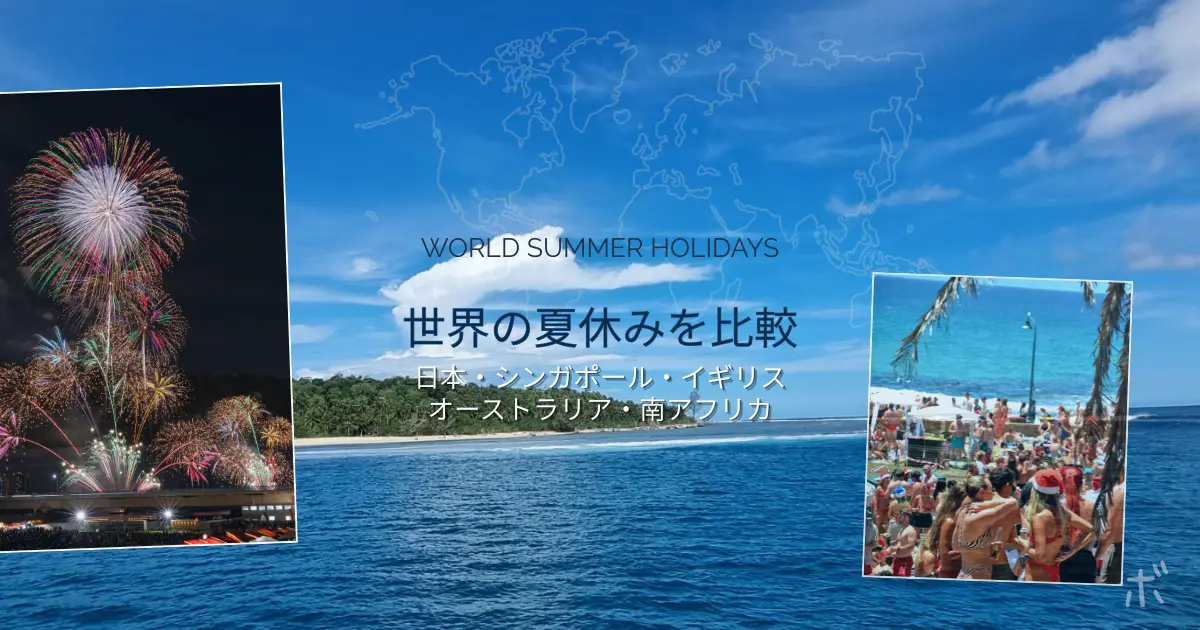
In Japan, summer vacation begins in late July. Around the world, however, some countries have their main school break in June, while others begin their summer holidays in December—right in the middle of winter in Japan.
This article looks at summer holidays in five countries—Japan, Singapore, the United Kingdom, Australia, and South Africa—comparing school break schedules, how people spend their time off, and the seasonal traditions that shape summer in each place.
🌻 Want to revisit the differences in summer holidays around the world later? Save this post 👇
On iPhone / iPad, choose 《 Share → Add to Home Screen 》 to save this page ✨
Revisit summer holidays, cultures, and everyday life around the world anytime 🌏🎆
Summer Holidays in 5 Countries | The Timing—and Even the Season—Can Be Completely Different
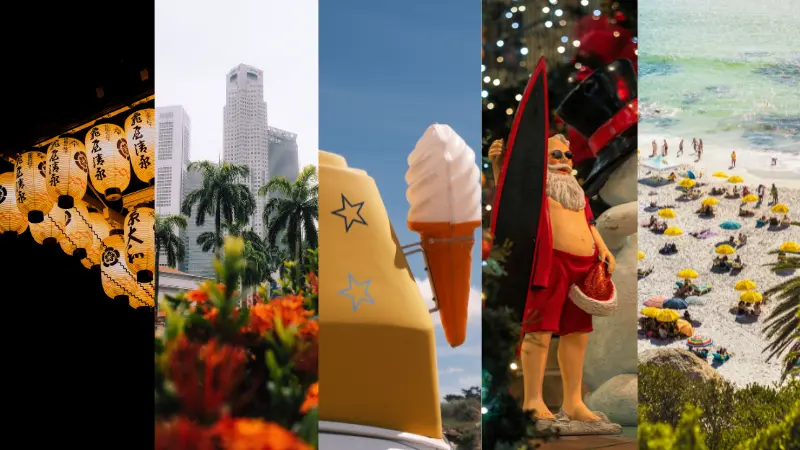
In Japan, summer vacation usually brings to mind the hot months of July and August.
Around the world, however, both the timing and the meaning of summer holidays can look very different. In Singapore, a major school break falls in June, while in Australia and South Africa, summer holidays begin in December—just as winter arrives in Japan.
First, here’s a quick look at how these five countries differ.
| Country | Major School Breaks | Season | Adult Leave / Key Features | Summer Culture & Typical Activities |
|---|---|---|---|---|
| 🇯🇵 Japan | Late July through late August | Summer | Many people take time off for the Obon holiday in mid-August. | Summer festivals, fireworks, Bon dances, visiting family |
| 🇸🇬 Singapore | June Holidays (May 30–June 28, 2026) | Hot and humid throughout the year | It's not like Japan, where everyone takes summer vacation at the same time. | Events During School Break: The Hungry Ghost Festival |
| 🇬🇧 United Kingdom | Regional variations exist. In England, cases typically occur from late July through late August. | Summer | Employees take their paid time off individually. There is also a Summer Bank Holiday. | The Beach, Festivals, Sports, Outdoor Events |
| 🇦🇺 Australia | Mid-December through late January and early February | Midsummer | Coincides with Christmas and the year-end and New Year holidays | The Beach, a BBQ, and a Midsummer Christmas |
| 🇿🇦 South Africa | Early December through mid-January | Midsummer | Some people take a vacation with their families at the end of the year | Beach, surfing, fishing, camping |
In 2026, Singapore’s mid-year school break ran from May 30 to June 28, lasting about one month. A shorter break is scheduled for September 5 to 13. These dates match the June Holidays and the one-week September break described by a local.
In the United Kingdom, school holiday dates are not standardized nationwide and can vary by local authority and school. Australia also has different school calendars by state and territory, with specific examples covered in the sections below.
🇯🇵 Japan | Summer vacation starting in late July, along with Obon, festivals, and fireworks
In Japan, summer vacation at many elementary, middle, and high schools runs from late July through the end of August. Although there are slight variations depending on the region and school, it is one of the longest school breaks of the year.
For children, summer break can mean trips to the beach or pool, traveling, and spending long days with friends. But summer in Japan has another major feature as well.
Obon: A Mid-August Break for Many Adults
Around mid-August, many adults take a few days off for Obon.
Obon is a traditional Japanese observance when people welcome and honor the spirits of deceased family members and ancestors. The main period generally falls around August 13 to 16, when many people return to their hometowns, spend time with family, or visit family graves.
Since school summer vacation and the Obon holiday for adults overlap, mid-August is also a time when families tend to get together.
Summer Festivals and Fireworks Are Part of the Season, Too
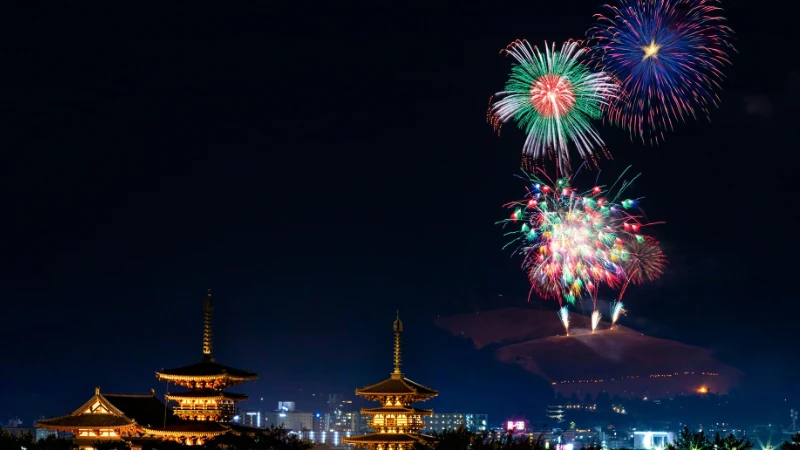
Summer festivals and fireworks are among the defining sights of summer in Japan.
From July through August, festivals, Bon dances, and fireworks displays are held throughout the country, and as evening falls, people dressed in yukata take to the streets. These scenes themselves are strongly associated with the summer season in Japan.
The Nagaoka Festival Grand Fireworks Display, held every year on August 2 and 3 in Niigata Prefecture, is one of the most famous examples. Over the course of two days, approximately 20,000 fireworks are launched, and it is known as one of Japan’s three major fireworks displays.
In Japan, summer break is shaped not only by time away from school, but also by Obon, local festivals, and fireworks.
That is one of the defining features of summer vacation in Japan.
🇸🇬 Singapore | June Holidays in a Country That’s Hot All Year Round
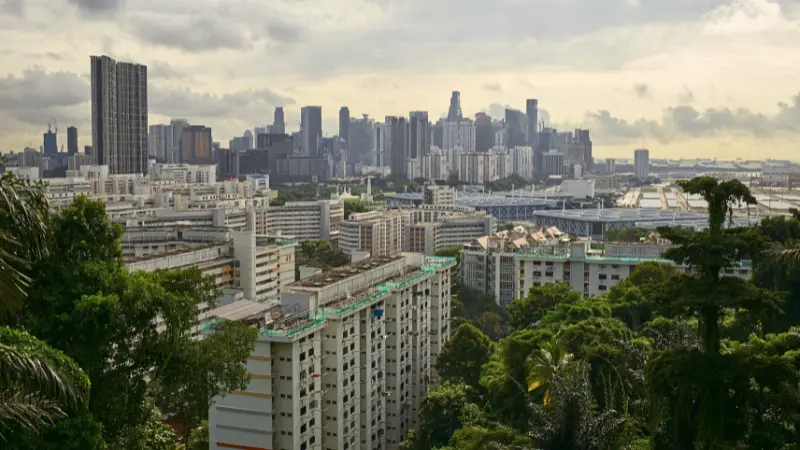
In Japan, both the temperature and the scenery change dramatically in the summer, but in Singapore, which is close to the equator, things are a little different.
Asked what summer feels like in Singapore, a local described it this way.
I think summer in Singapore just feels even hotter than usual.
Maybe there's a little less rain?
But honestly, I don't really notice much of a difference. It's just always hot and humid.
I always hear the term “rainy season,” but I’m not really sure when it actually is.
Unlike Japan, where the transition from spring to summer is easy to feel, Singapore stays hot and humid throughout the year.
For this reason, in Singapore, school breaks on the academic calendar serve as clearer markers than the season of summer itself.
June Holidays: About a Month Off School
The school calendar came up as well.
Yes, there is a break.
We usually call it the “June Holidays.” It’s in June, after all.
Also, I think we used to have a one-week break in September when I was in middle and high school.
According to the 2026 school calendar, the break between Semester 1 and Semester 2 runs from May 30 to June 28. Additionally, a break is scheduled between Term 3 and Term 4, from September 5 to 13.
The vacation period known locally as “June Holidays” actually lasts about a month.
Another difference is that while summer vacation begins in late July in Japan, June is the main school break in Singapore.
Is it a little like Japan's Obon? The Hungry Ghost Festival
When Japan’s Obon tradition came up, a local pointed to a somewhat similar custom in Singapore.
That is the Hungry Ghost Festival (Zhongyuan Festival / Ghost Month), observed during the seventh month of the lunar calendar.
I think the closest thing in Singapore would be the seventh month of the lunar calendar.
I guess it's something that people of Chinese descent mainly "celebrate."
Maybe it's even stronger among Buddhists and Taoists?
The Hungry Ghost Festival is held in the seventh month of the lunar calendar and is a cultural tradition primarily observed among Chinese Buddhists and Taoists. It is believed that the gates of hell open during this time, allowing spirits to walk the earth, and it is customary to offer food and burn incense and paper offerings.
The custom was described this way:
To put it simply, it's kind of like the gates of hell opening up and the spirits of the dead being able to roam the earth.
That's why many people place food offerings along the side of the sidewalk and other places like that.
Also, I think they'll burn things like "hell money."
While there are similarities with Japan’s Obon festival in terms of honoring ancestors and the deceased, the religious background and specific customs are not the same.
It is interesting to see how two traditions can resemble each other while still reflecting different cultural and religious backgrounds.
Are there any summer festivals like the ones in Japan?
Asked whether Singapore has anything like Japan’s summer festivals, the answer was:
I don't think there are any summer events in Singapore, but there might be some events scheduled to coincide with the June holidays.
I think the Japanese School holds a summer festival every year.
It always coincides with my exams at the end of August, so I've never been able to go.
In Singapore, where it’s hot all year round, the summer season itself doesn’t seem to trigger a flurry of festivals the way it does in Japan.
Rather than summer itself, the June Holidays serve as a clear break in the year.
It reveals a very different kind of school break from Japan’s—one shaped by life in a country that stays warm all year.
🇬🇧 United Kingdom | Summer vacation dates vary by region
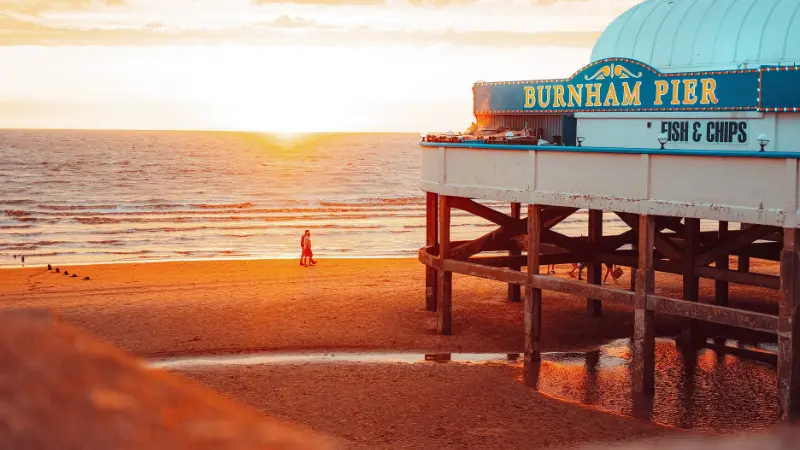
Schools in the UK have summer holidays too.
Unlike in Japan, however, schools across the country do not all break up at roughly the same time. Term dates and school holidays vary by region, local authority, and school.
Late July to the End of August Is a Common Pattern in England
For example, in 2026, summer vacation in Barnsley, England, runs from July 21 to August 31. In the BCP Council—which includes Bournemouth and other areas—summer vacation begins on July 23.
Meanwhile, in Northern Ireland, the 2026 summer vacation begins on July 1.
Even within the United Kingdom, the start of the holidays can vary by several weeks depending on where you live.
There is no single nationwide start date for the UK’s summer holidays, so the exact dates need to be checked with each local authority or school.
Adults Use Annual Leave for Summer Holidays
The way adults take time off is also a little different from Japan’s Obon holiday.
In the United Kingdom, many workers are legally entitled to 5.6 weeks of paid annual leave. For someone working five days a week, this generally amounts to 28 days per year.
Workers can use this annual leave for summer trips or longer breaks, but there is no nationwide mid-August holiday period comparable to Japan’s Obon.
The UK also has summer Bank Holidays, or public holidays. In 2026, the Summer Bank Holiday falls on August 31 in England and Wales, and on August 3 in Scotland.
Even the date of the summer Bank Holiday differs between nations within the UK.
Beaches, Festivals, and Outdoor Events Shape the British Summer
Summer in the UK has its own rhythm, shaped by seaside trips, festivals, sports, and time outdoors.
People spend time at the beach, attend music and food festivals, and enjoy sports and outdoor events. Along the coast, walking, rock pooling, and surfing are also popular summer activities.
Somewhat surprisingly, some areas also hold fireworks events during the summer.
Bournemouth, for example, hosts seaside fireworks on Friday nights during the summer.
Fireworks are not as closely tied to summer nationwide as they are in Japan, but they still feature in some seaside summer events.
Official school calendars and common summer activities show that even two countries in the same Northern Hemisphere can have very different holiday patterns.
🇦🇺 Australia | Summer vacation comes along with Christmas
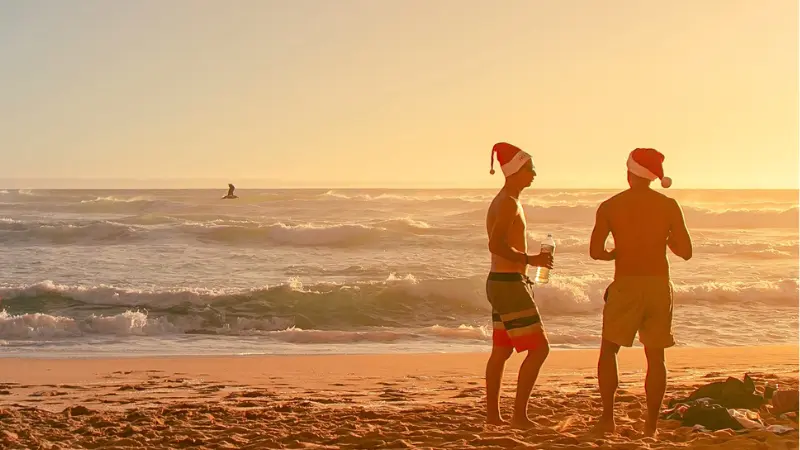
While Christmas in Japan arrives with winter coats, December is the middle of summer in Australia.
Summer in Australia runs from December through February. In southern parts of the country, hot and sunny days are common, making swimming and surfing popular ways to spend the season.
The long school summer holidays begin around the same time, at the end of the year.
Summer Break Varies by State
Australia does not have a nationwide school calendar either; the schedule varies by state and region.
Looking at public schools for the 2026–2027 school year, the main examples are as follows:
- Eastern NSW: December 18–January 27
- Western NSW: December 18–February 3
- Queensland: December 12–January 26
- Victoria: Term 4 of 2026 ends on December 18, and Term 1 of 2027 begins on January 27.
Although dates vary somewhat by state, a clear pattern emerges: the long summer break generally runs from around mid-December through late January or early February.
In other words, for Australian children, summer holidays overlap with Christmas and the year-end and New Year period.
In Japan, summer and winter breaks are separate, but in Australia, they overlap into a single long vacation.
Adults Are Entitled to Four Weeks of Annual Leave
In Australia, full-time and part-time workers are generally entitled to four weeks of paid annual leave.
Since the school’s long vacation coincides with the Christmas and New Year’s holidays, summer is a season when family trips become more common.
A Blue Sea Beyond Santa Claus
One of the interesting things about summer in Australia is the Christmas scenery.
A swim or surf at the beach can be followed by a Christmas BBQ in the sunshine.
Not white snow, but a white sandy beach.
Not a thick coat, but a swimsuit and a Santa hat.
Even though it’s the same December 25, a very different kind of Christmas is celebrated there compared to Japan.
One of the clearest differences from Japan is how Australia’s summer holidays merge with Christmas and the year-end and New Year period.
🇿🇦 South Africa | December Summer Holidays and a Childhood Spent by the Sea
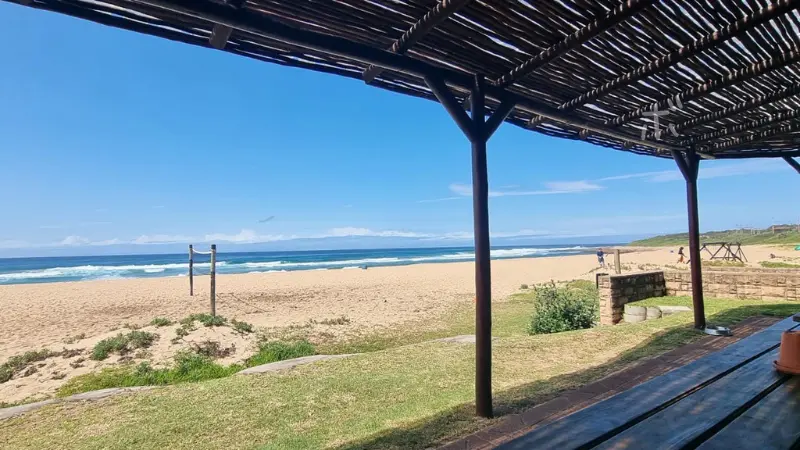
South Africa, which is in the Southern Hemisphere like Australia, also has seasons that are the opposite of Japan's.
December is the height of summer. And the school’s long break begins at the end of the year.
Asked about summer holidays, a local in South Africa described them this way.
Of course, we have summer vacation in South Africa, too.
School breaks usually last about a month. Many people take their year-end vacation together with their children.
It's generally from around December 15 to around January 16.
This is an approximate range based on one local’s personal experience.
According to the official 2026 calendar for South African public schools, the final school term ends for students on December 9. The 2027 school year begins on January 13, leaving a year-end break of about one month.
Humid Summers—and Year-Round Beach Weather in Some Areas
In the area where the local contributor lives, humidity becomes particularly high in summer.
This area gets really humid in the summer.
It's always perfect beach weather.
However, right after that, he also said this:
But… here, it’s actually perfect beach weather all year round.
It's a subtropical climate, after all.
In Japan, it feels like the beach season doesn’t really begin until summer, but in some places, the beach isn’t just a special seasonal activity—it’s right there as part of everyday life.
That difference alone is enough to make the summer vacation scenery look quite different.
BMX Rides to the Beach, Surfing, Fishing, and Sports
Asked how he spent school holidays as a child, the stories that followed were remarkably active.
Riding a BMX to the beach, surfing, and fishing.
I played soccer, tennis, squash, and rugby, and I also went running.
At night, we built bonfires in the bushes and on the beach, and we even went camping.
Back then, there weren't any smartphones, after all.
A bike ride to the beach could lead straight into surfing or fishing.
Days were spent playing sports and running around, with bonfires and camping after dark.
It sounds almost like a childhood straight out of *Stand by Me*.
Campfires without adults, and even homemade go-karts
Asked whether any adults had been around for those bonfires, the answer was even more surprising.
Yeah, when I was a kid, I used to build campfires without any adults around (haha).
That's not all.
They built their own go-karts, made bows and arrows to play with, and, once they reached their teens, apparently became obsessed with playing ninja.
He even bought a ninja costume and made his own tools, such as shuriken.
With all the kung fu movies he watched, the commitment to those games was clearly on another level.
Today's children have smartphones, video games, and social media.
With none of that around, bikes, homemade creations, the outdoors, and whatever happened to be nearby became the entertainment.
What began as a question about summer holidays in South Africa ended up revealing not only differences between countries, but also how childhood itself changes from one generation to the next.
Comparing 5 Countries Shows That Summer Holidays Can Mean Very Different Things
Across these five countries, the same phrase—“summer holiday”—can describe surprisingly different experiences.
Even the Timing of the Break Is Different
In Japan, summer break generally runs from late July through August.
In Singapore, the June Holidays last about a month, from late May through June.
In the United Kingdom, dates vary by region, but late July through the end of August is a common pattern in England.
In Australia and South Africa, summer break runs mainly from December to January.
In Japan, summer holidays and Christmas belong to completely different seasons. In Australia and South Africa, however, the two overlap.
Even the Way Summer Feels Is Different
In Japan, the end of the rainy season, rising temperatures, and the sound of cicadas all signal that summer has arrived.
In Singapore, by contrast, the weather stays hot and humid throughout the year, so the shift into “summer” is not felt as clearly as it is in Japan.
Australia and South Africa are in the middle of summer while Japan is in the grip of winter.
Simply comparing holiday periods reveals where each country sits in the world and the kind of climate that shapes everyday life there.
How People Spend Their Time Reflects Everyday Life in Each Place
In Japan, summer means festivals, fireworks, and trips home for Obon.
In Singapore, there are the June Holidays and the Hungry Ghost Festival during the seventh month of the lunar calendar.
In the UK, summer brings seaside trips, festivals, and outdoor events.
In Australia, midsummer Christmas comes with days at the beach.
In parts of South Africa, the beach is part of everyday life year-round, along with surfing and fishing.
Even under the same label of “summer holiday,” the scenery can look completely different.
What these countries do share is the chance to step away from school or work, spend time with family and friends, and enjoy things that everyday routines leave little room for.
Summary | Comparing Summer Holidays Reveals Everyday Life in Each Country
Comparing summer holidays around the world shows that the differences go far beyond the number of days off.
When do people take time off?
Who do they spend it with?
Where do they go?
What events fall during that season?
Those differences reflect each country’s climate, education system, religion, family life, and even childhood memories.
In August, when people in Japan look up at fireworks, winter is still in full swing in South Africa and Australia.
And when December rolls around—the time of year when people in Japan start wearing coats—summer holidays begin for children in Australia and South Africa.
In Singapore, people don't really perceive a clear distinction between summer and the other seasons the way they do in Japan.
The scenery that lies beyond the phrase “summer vacation” is not the same everywhere in the world.
That is why hearing how people elsewhere actually spend their time can make even a familiar summer look a little different.
You May Also Like
- Compare Spring Break Around the World | From Spring Break in the U.S. to How Different Countries Spend the Season
- Winter Around the World | How the Season Differs Between Japan and 8 Other Countries
- New Year Around the World | How Different Cultures Celebrate and Spend the Holiday Season
On iPhone / iPad, choose 《 Share → Add to Home Screen 》.
Turn Bob’s Toy Box into a pocket guide to holiday dates and summer traditions in five countries 🏖️
🌏 Keep comparisons of seasons, cultures, and everyday life around the world close at hand ✨
*Information on school holiday schedules and policies is based on sources from government and education authorities as of August 2026. Dates may vary by school and region. Comments from Singapore and South Africa reflect the personal experiences and impressions of local residents. Information on the United Kingdom and Australia is based primarily on official sources and general examples.