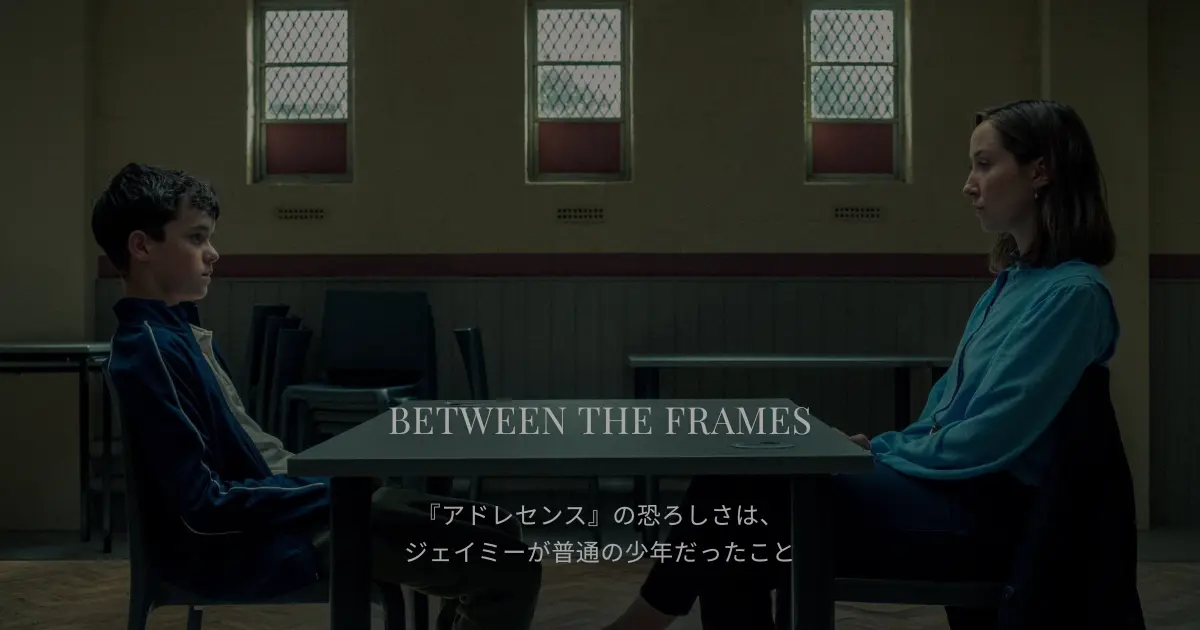
The Netflix original drama “Adolescence” never offers clear answers until the very end.Who was truly at fault? Where did everything go wrong? Was Jamie really a “monster”?
Across all four episodes, “Adolescence” portrays not a special kind of evil, but the frightening instability hidden inside an ordinary teenage boy.
Watch this film
🎬 Adolescence (2025)
- Number of episodes: 4 total
- Genre: Crime
- Watch "Adolescence" on Netflix
“Adolescence” Depicts the Danger Hidden Inside an Ordinary Boy
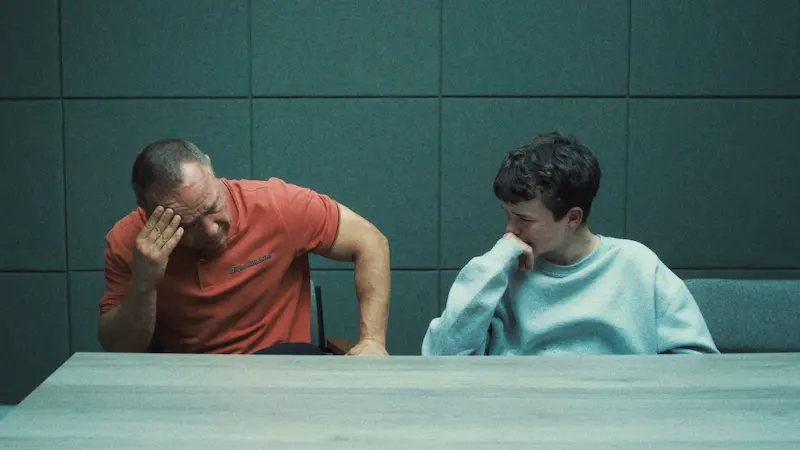
Jamie Was Not a “Special Monster”
What struck me while watching the Netflix drama “Adolescence” was that Jamie was not portrayed as an "anomaly" from the start.
He is also a victim of bullying and appears to be a normal adolescent boy, hurt by the stares of those around him and looking for affection and approval. He has a lot of emotional ups and downs, is awkwardly distant from his surroundings, and is somewhat childish.
Therefore, the viewer cannot completely separate Jamie as a “monster”.
What makes “Adolescence” so unsettling is that Jamie never feels like a special kind of monster. Instead, he feels frighteningly close to an ordinary teenage boy.
The Emotions Portrayed Here Exist in Everyone
The anger and humiliation portrayed in "Adolescence" are not unique.
The desire to be recognized.
The fear of being disrespected.
The urge to prove oneself to the people who laughed at them.
Many people have likely experienced those feelings at some point in their lives.
Of course, most people stop there. They feel anger, but they don't turn their emotions directly into action.
“Adolescence” depicts how far people can break down when they fail to handle their emotions properly.
Therefore, this work is not a story about “someone special,” but quietly touches the emotions of the viewer.
It Felt Real Because Jamie Seemed Ordinary
There is something deeply contradictory about Jamie.
He can seem vulnerable one moment, then suddenly explode with anger the next. While he appears to want love and acceptance, he also reveals a side of himself that tries to dominate others.
The interview scene in the third episode showed this danger particularly strongly. However, it did not feel like a “completely different persona,” but rather a mixture of immature emotions that had not yet been sorted out.
Anger, loneliness, need for approval, fear.
The emotional instability of adolescence had never fully settled inside Jamie.
What was he feeling? Why was he so angry? It seemed that Jamie himself was unable to sort out his feelings.
It is precisely because this immaturity feels so realistic that “Adolescence” leaves such a strong impression as a work that portrayed not just a crime drama but the peril of humanity itself.
Jamie’s Desire for Control in “Adolescence”
Anger at Being Told What to Do
The interview scene between Jamie and the psychologist in Episode 3 of the Netflix drama “Adolescence” reveals the dangerous instability hidden inside him.
Up to this point, Jamie had seemed somewhat weak and victimized. However, once the interviews began, his demeanor changed completely.
The moment he was urged to sit down, he yelled, "Don't tell me what to do," and exploded with emotion. There was a danger in his appearance that was different from that of a mere rebellious adolescent boy.
What stands out most is Jamie’s intense reaction to “being told what to do.”
The psychologist was not accusing him of anything. Rather, she was trying to keep the conversation moving in a calm manner.
Still, Jamie seemed unable to tolerate someone else taking control. This may have had something to do with his self-esteem, which had been damaged by bullying, and his desire not to be looked down upon by anyone.
What stood out most was that the person sitting across from him was a woman.
In his work, Jamie has hinted at a history of being hurt by Katie. It seemed as if this experience had distorted his perception of women.
Perhaps that is why he reacted more strongly to being controlled by a woman than to being psychologically analyzed.
The Smile That Came After the Anger
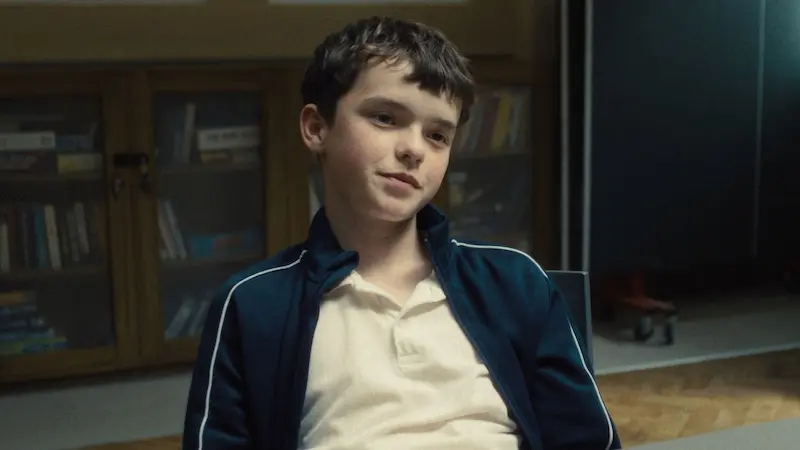
Another striking aspect of the interview scene was Jamie's emotional turnaround.
One moment, Jamie is yelling and throwing chairs in an emotional outburst. The next, he suddenly regains his composure and quietly studies the psychologist’s reaction.
Then he calmly tells her, “Your face is red,” before asking, “Were you scared?”
At that moment, Jamie seemed to be watching how the other party would react, rather than getting angry.
Had he frightened her?
Had he unsettled her?
Had he managed to take control?
It almost feels as though Jamie is checking to see how much power he has over her emotions.
One of the most disturbing moments comes when Jamie says, “I’m only 13, and I don’t even look scary.”
Normally, these are words one might say to calm oneself, but in Jamie's case they seemed a little different. “But you were still scared, weren't you?” It was eerie, because it was as if he was checking for their reaction.
Of course, Jamie is not portrayed as a ruthless monster.
Episode 3 strongly depicts not only anger and fear, but also “the danger of trying to take control by shaking other people's emotions.
And that immature desire for control created a tense atmosphere throughout that interview scene.
The Danger Behind “I’m Better”
One of the most quietly disturbing moments in the interview scene is when Jamie says, “I’m better.”
Talking about Katie’s fear of the knife, Jamie said, "I'm sure other people would have touched it. But I didn't. So I'm better.
What was frightening about these words was that the standard for “what not to do” had become “comparison with others,” rather than within oneself.
Essentially, the situation was already compromised when he was terrorizing his opponent with a knife in his hand. Jamie, however, seemed to be justifying himself based on the fact that he had not done anything worse.
Moreover, there is a childishness to Jamie in that scene, as if he does not fully understand the abnormality of his words.
Jamie still understands good and evil.
He likely understands the weight of death on an intellectual level as well.
However, that understanding still does not seem fully connected to reality for him.
What had he done? How irreversible were his actions?
Jamie himself seemed to be still trying to sort it out.
Perhaps it was not that Jamie viewed his actions lightly, but that he was still too emotionally immature to fully understand and process them. That unsettling immaturity is what keeps “Adolescence” from feeling like a simple story about a disturbed killer.
“Adolescence” Did Not Place the Blame on One Person
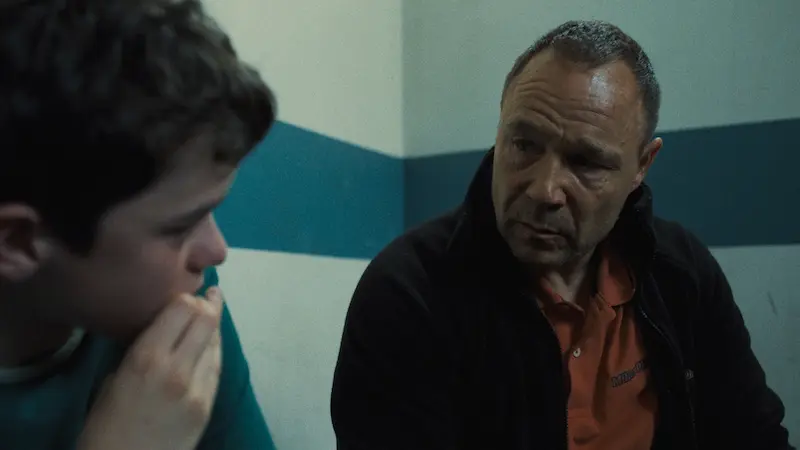
Jamie’s Father Kept Searching for Answers
In the fourth and final episode, Jamie's father kept blaming himself.
Where did I go wrong?
Why didn't I realize it?
There must have been a problem with the way I raised him.
It seemed that Jamie was continually searching within himself for the cause of his murder. However, "Adolescence" does not give a clear answer to that question.
It is not to say that the father was not responsible at all. However, it did not seem to portray the father as the sole cause.
Episode 4 also quietly depicted the distance and loneliness that existed within the family, but that is not the only explanation for Jamie's existence.
This is probably why the father could not reach the “answer” until the end.
Jamie Was Shaped by More Than One Thing
It feels as though Jamie’s anger and instability were not caused by his family environment alone. The series also strongly suggests the influence of his relationship with Katie and the experiences he had at school.
The adolescent's unique need for approval.
Fear of being looked down upon by those around them.
The desire to be recognized by someone.
It seems that these feelings gradually built up and became distorted in Jamie's mind. And in the background, there was a complex intertwining of many factors: home, school, relationships, loneliness, anger, and so on.
Perhaps what makes “Adolescence” so frightening is the impossibility of pointing to a single cause.
The story refuses to place all the blame on a single person. That is why such heavy emotions linger long after the series ends.
It Was Frightening Because Jamie Was an Ordinary Boy
The fear that lingers after watching “Adolescence” is that Jamie was not portrayed as a "special monster".
Anger, loneliness, and the desire for approval itself are emotions that are present in everyone.
Of course, many people hold on to those feelings, but reason keeps them at bay. They do not turn their emotions directly into violence.
However, "Adolescence" quietly depicted how far people can break down when they fail to handle their dangerous emotions.
Jamie never feels like a complete monster. In many moments, he simply looks like an ordinary teenage boy.
That is what makes this story feel impossible to dismiss as someone else’s problem.
Perhaps “Adolescence” is not a story about someone extraordinary at all, but about the immaturity and emotional danger that can exist inside ordinary people.
You May Also Like
- How CLOSE (2022) Portrays the Pain of Unspoken Emotions
- The Disturbing Reality Behind Samuel Bateman and Child Control

On iPhone / iPad, choose Tap Share → Add to Home Screen 》.
One tap will open "Between the Frames".
For the moments when you want to quietly reconnect with unspoken feelings.
Adolescence." ©︎Netflix, Inc.
*The information on this page is current as of May 2026. Please check each official page for the latest distribution status.