The Netflix documentary “Samuel Bateman: The Dark Side of a Polygamous Cult” quietly reveals the reality of a closed religious community. What unfolds is not a series of extraordinary events, but a way of life that takes shape as “the norm.” This article explores the structure of the FLDS and examines what it means to grow up in a world where children are not given the ability to choose.
What "Samuel Bateman: The Dark Side of a Polygamous Cult" Reveals
Although it is difficult to describe this work in a few words, what remains after viewing it is a strong sense of discomfort.
What is depicted is by no means a special event. Rather, what we see are “things that happen naturally” in a closed environment.
Each of these events is somewhat within the realm of expectation. Yet still, the viewer’s emotions are gradually worn down.
It is not because there is a shocking development, but because the flow, which should have been stopped, continues unabated.
What "Samuel Bateman: The Dark Side of the Polygamy Cult" projects is a structure that cannot simply be separated by right and wrong.
From the outside, it is obviously distorted. However, inside, it is accepted as "correct".
The discrepancies build up throughout the work. And you will notice it.
It reminds us that people can reshape what they see as “normal” depending on their environment.
What is FLDS|“Normal” in a closed world”
FLDS Basics and Features
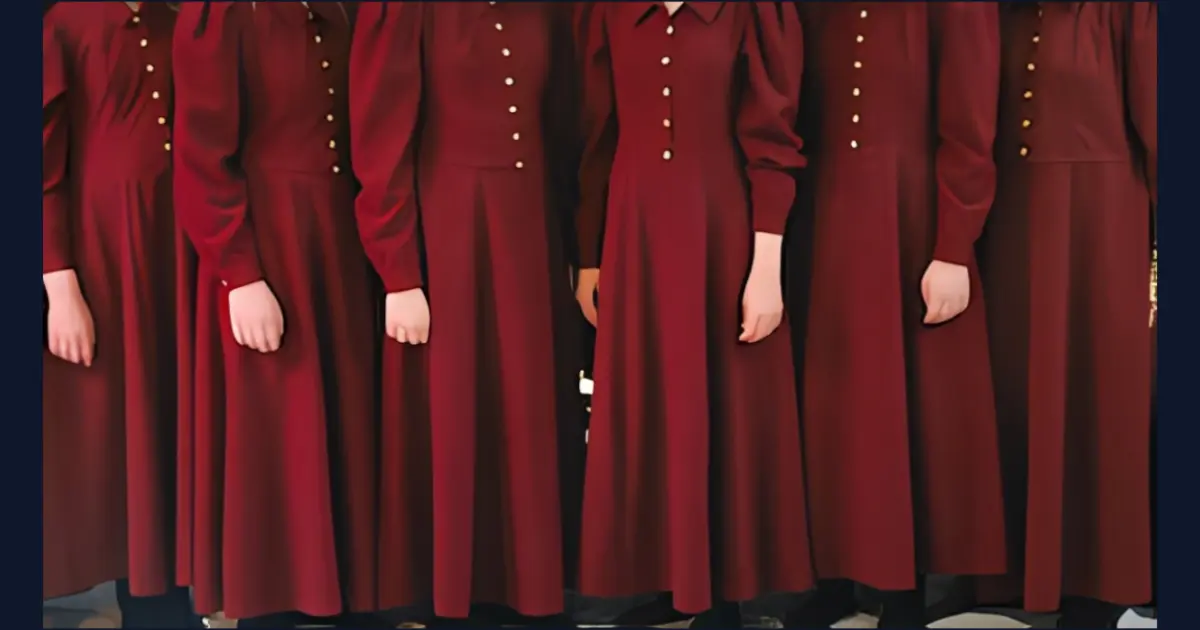
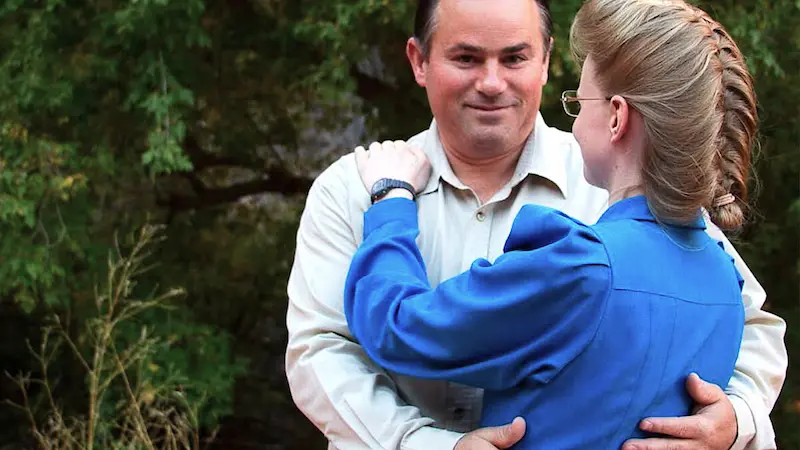
The FLDS (Fundamentalist Church of Jesus Christ of Latter-day Saints) is one of the US-based religious communities that branched off from Mormonism (LDS).
It is also known for its acceptance of polygamy and its strong hierarchical structure. Particularly distinctive is the closed environment that keeps the community at a distance from the outside world.
In this context, the words of the prophet, have absolute meaning. There are many situations where the doctrine or the judgment of the leader takes precedence over the will of the individual.
Why are those values maintained?
For those born and raised in such an environment, the values will be accepted as the norm, not something special.
This is because it becomes part of our daily routine as the right thing to do before we even come up with the idea of doubting it.
And the norm is very different from the outside world. But as long as you are inside, it is not easy to notice the difference.
Even structures that appear distorted from the outside are established as a consistent order within them.
Inside the FLDS was a community that was already crumbling. A new entity claiming to be a prophet emerged to fill in the gaps.
The result may be “a state in which we seem to be making a choice, but we are not.
Being Born Without the Ability to Choose
A Choice That Is Never Given
Children born in that circle must be called victims.
This is because there is no assumption of "choice".
What do you believe?
Where to live.
Such choices, which should normally be left to the individual, have already been made by the time they are realized.
It is an environment where we are expected to accept it as the right thing to do before we can question it. As long as we grow up in this environment, it becomes difficult to imagine other options.
Parents have also lived through it.
On the other hand, It is difficult to place all the blame on the parents.
They are also people who were born and raised in that environment and whose lives have been shaped by the same values. Belief in prophets and God is not a special act, but is rooted in everyday life itself.
They grow up knowing only that way of life, have families of their own, and pass on the same values to the next generation.
There seems to be more of a reality that they had no choice but to live that way, rather than malice.
To Believe, or Simply to Obey
What emerges through "Samuel Bateman: The Dark Side of the Polygamy Cult" is the ambiguity of the state of belief.
You obey because you believe.
Or do you recognize that you believe in it because it is supposed to be obeyed?
In a closed environment, the boundaries become increasingly blurred. Actions that one would have chosen of one's own volition may in fact be nothing more than “adaptation” to the limited options available.
When you think about it, it appears that what is there is not so much faith as a series of actions rooted in the environment.
Is family really “protection”?
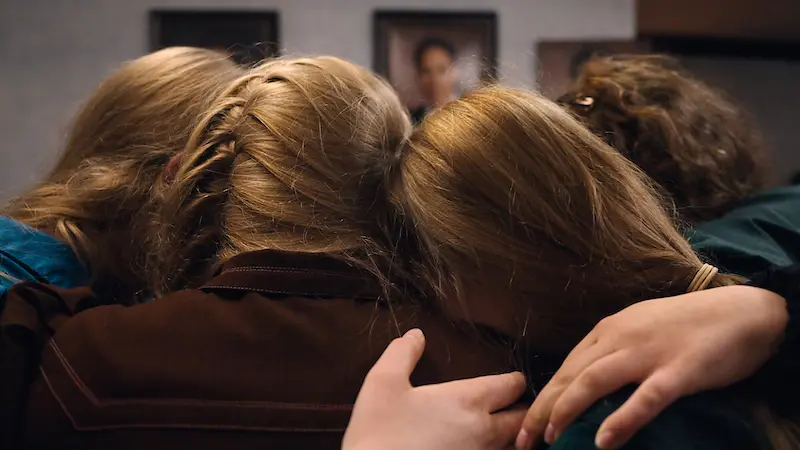
Those who can truly say that they are happy with their family may be those who have lived in a privileged environment.
Not every family is a safe place to live.
The relationship can function as a role or obligation rather than a support.
In an imperfect environment, the family does not always become the entity it is meant to be. Sometimes they can act as a frame that forces you to stay there.
It is a fact that relationships that are supposed to help each other can become a place where there is no escape. And the values that are nurtured in these relationships are passed on to the next generation without the opportunity to question them.
It is not a special case, but a flow that can happen naturally the more closed the environment is. That is why the same structures will be repeated.
There is a quiet disconnect between the original meaning of the word "family" and the reality of what is actually happening within it.
When we become aware of this discrepancy, we may have to reexamine whether the feeling of being protected is really protection.
Does the child have the “right to choose”?
Religion itself is not all bad. It is true that some people can be saved there.
But there is something else to consider.
The question is whether the child has "chosen" this faith for himself or herself.
What if our values and way of life are predetermined by the environment in which we were born?
What if we are not even given the opportunity to question there.
Can we say that we really believe that?
Essentially, once they are old enough to understand, will you choose to live in it or will you choose the outside world? You should have the opportunity to decide for yourself.
In fact, there are some communities that have set aside time for such a choice.
The idea is to choose one's own place in the world after being exposed to the outside world.
In comparison, how should we understand an environment where no choice exists from the start?
Believe and obey.
When those boundaries become blurred, to what extent can one say that one is living at one's own will?
Only that question continues to remain silent.
You May Also Like
- Between the Frames | Holding On and Learning to Live (Close / 2022)
- 10 A24 Films to Watch in Spring | Quiet Stories That Stay With You
- Netflix April 2026 Releases | What to Watch This Month
Samuel Bateman: The Dark Side of the Polygamy Cult ©︎Netflix, Inc.
*The information on this page is current as of April 2026. Please check each official page for the latest distribution status.