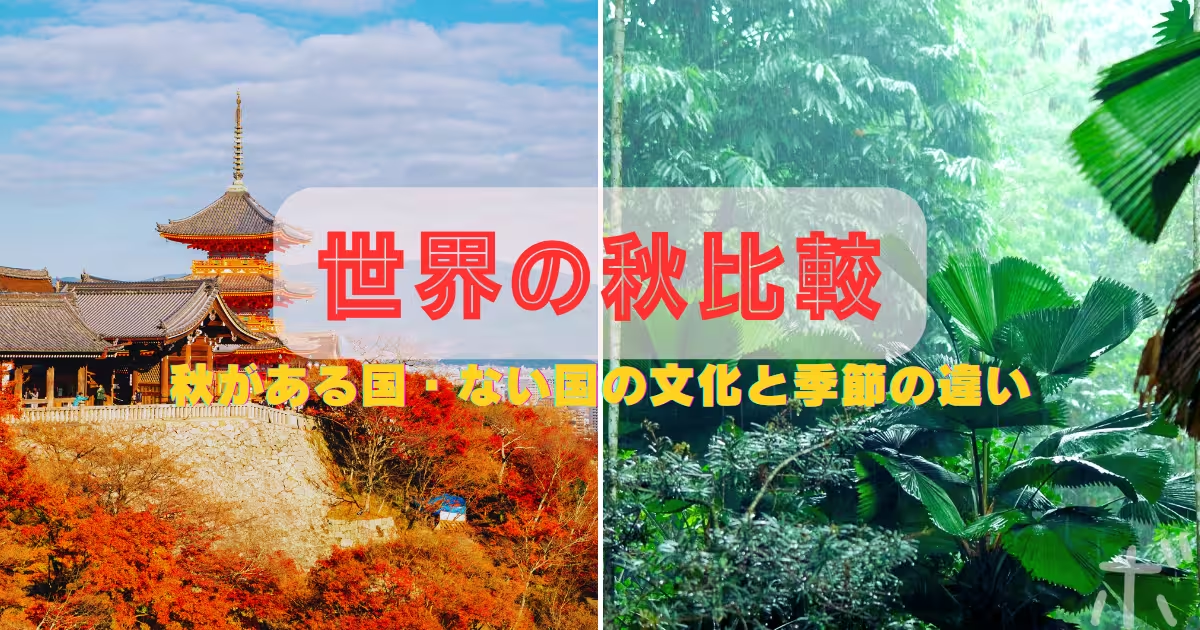
When you hear the word “autumn,” many people in Japan imagine colorful foliage, autumn festivals, delicious seasonal foods, or cozy reading days. However, there are actually many countries in the world where autumn as a season doesn’t exist at all. In this article, we explore seasonal diversity across the globe by comparing countries with and without autumn — looking at cultural differences, climate variations, and even insights from people who grew up in those regions.
🔖 Why not save these differences in autumn across countries so you can revisit them later?👇
On iPhone / iPad, choose Tap Share → Add to Home Screen 》 to save this page ✨
Save seasonal comparisons from around the world as a “bookmark memo” for easy reference anytime 📍🍁
Are Japan’s Four Seasons Unique?
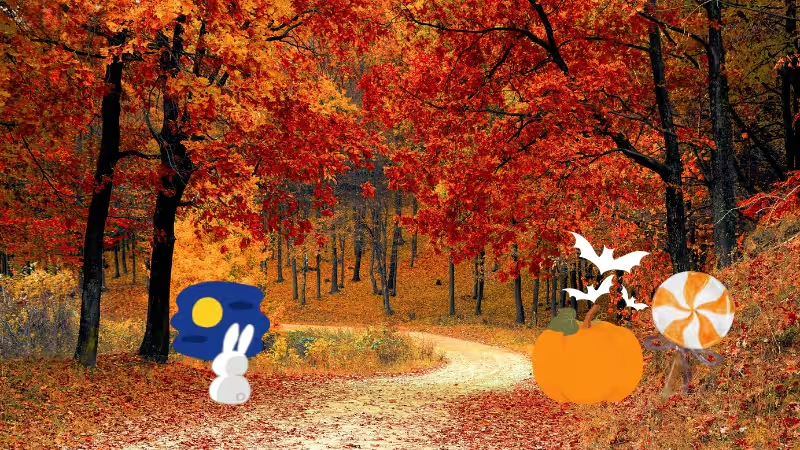
In Japan, the four seasons — spring, summer, autumn, and winter — are considered a natural part of life. Cherry blossom viewing in spring and admiring the autumn leaves in fall are just a few examples of how deeply the enjoyment of seasonal change is rooted in Japanese culture.
Western countries (such as the United States, Germany, and France) also have clearly defined four seasons,and autumn is a culturally significant season marked by foliage, harvest festivals, and Halloween.Autumn also exists in the Southern Hemisphere, including countries like Australia,but because the seasons are reversed there, autumn occurs from March to May.
However, the image of “autumn” can differ greatly depending on the country. A Swiss person once told me: “I don’t really like autumn because it’s often rainy and cloudy. I actually prefer Japan’s autumn — the weather is nice, and the autumn leaves are beautiful.” Even though it’s the same season, how people experience its charm varies widely from place to place.
In many parts of the world, regions that experience clearly defined four seasons like Japanare actually in the minority.
What Defines a Country Without Autumn?
Nations with Only Rainy and Dry Seasons
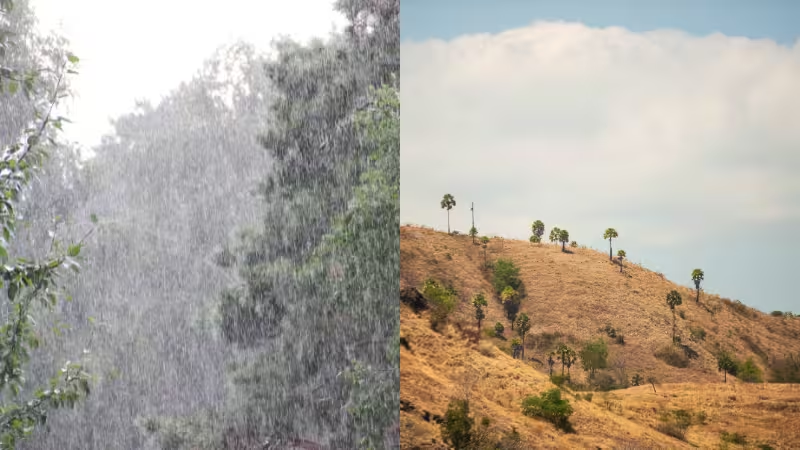
In Japan, the four seasons—spring, summer, autumn, and winter—are taken for granted, but in tropical countries,there are only two distinct seasons throughout the year: the rainy season and the dry season.Therefore, the familiar sense of “autumn” that Japanese people experience doesn’t really exist in those regions.
In these countries, the rainy season brings frequent heavy showers, while the dry season offers long stretches of clear, sunny weather. For example, during the rainy season, fresh tropical fruits are abundant, while in the dry season, people often prepare dried fish and preserved foods — showing how the rhythm of life and food culture is closely tied to the seasonal cycle.
Here are some examples of tropical regions:
- Philippines:Mainly two seasons — the rainy season (May–October) and the dry season (November–April). The temperature remains high and humid year-round, giving it a “perpetual summer” feel.
- IndonesiaOnly rainy (November–April) and dry (May–October) seasons. Located right on the equator, it stays hot all year, with particularly strong sunlight during the dry season.
- Northern Australia:The tropical north divides the year into wet (December–April) and dry (May–November) seasons. The wet season is hot and humid with rapidly changing weather, while the dry season offers longer daylight hours and more comfortable conditions.
When I asked someone from Indonesia about it, they said, “We only have the rainy and dry seasons, so I don’t really understand what autumn is. It’s something I see in anime.” It’s fascinating that many people learn about autumn through Japanese culture and media rather than experiencing it firsthand.
Countries with Only Summer and Winter
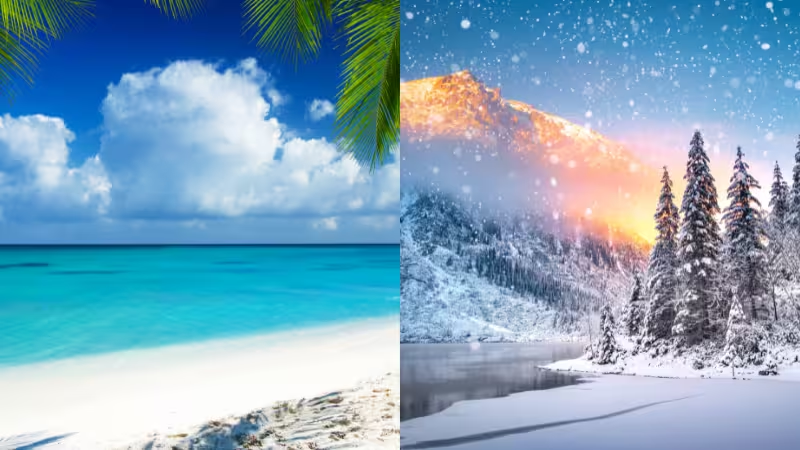
It may come as a surprise, but in some parts of Australia, people feel that there are only two seasons: summer and winter.
Spring and autumn are indeed present,but because temperature differences and changes in nature are far less dramatic than in Japan, many Australians tend to regard their country as a two-season land.
When I asked a local, they said, “It's only summer and winter, but summer is actually pretty cool!” Indeed, places like Sydney and Melbourne rarely hit 30 degrees even in summer. Compared to Japan, the average temperatures don't climb as high, making for a much more comfortable climate.
That said, Australia is an enormous country — about 21 times larger than Japan and the sixth largest in the world. Because of its vast landmass, the climate varies greatly by region, from tropical areas in the north with distinct wet and dry seasons to more temperate southern zones.
Countries with Six Seasons
Interestingly, in addition to Japan’s four seasons and the tropics’ two seasons,there are also countries that have six distinct seasons,with Bangladesh being a notable example.
In Bangladesh, the year is divided into six seasons according to the Bengali calendar. Each season is closely tied to agriculture and religious festivals, shaping a unique rhythm of life deeply rooted in the local culture.
- Summer (Grishmo / Apr–Jun):The hottest time of the year, when mangoes and jackfruits ripen.
- Rainy Season (Borsha / Jun–Aug):Marked by heavy monsoon rains, often leading to flooding.
- Autumn (Shorot / Aug–Oct):Clear skies and calm weather; also a season of many festivals.
- Late Autumn (Hemonto / Oct–Dec):The rice harvest season, when rural areas are at their busiest.
- Winter (Sheet / Dec–Feb):Cool mornings with mist, though far milder than Japan’s winters.
- Spring (Boshonto / Feb–Apr):A colorful season of blooming flowers and vibrant spring festivals.
Japan is a country of four seasons, so we have a strong image of the year as having four seasons, but it is interesting to note that some countries, such as Bangladesh, have subdivided the seasons according to agricultural and cultural rhythms.
AdditionallyIndia is also traditionally said to have six seasons,which appear in ancient poetry and religious events: spring (Vasant), summer (Grishma), monsoon (Varsha), autumn (Sharad), pre-winter (Hemant), and winter (Shishir).
Although the modern division into “rainy” and “dry” seasons has become more common, this delicate awareness of the six seasons still lives on in literature and festivals.
Seasonal and Cultural Connections
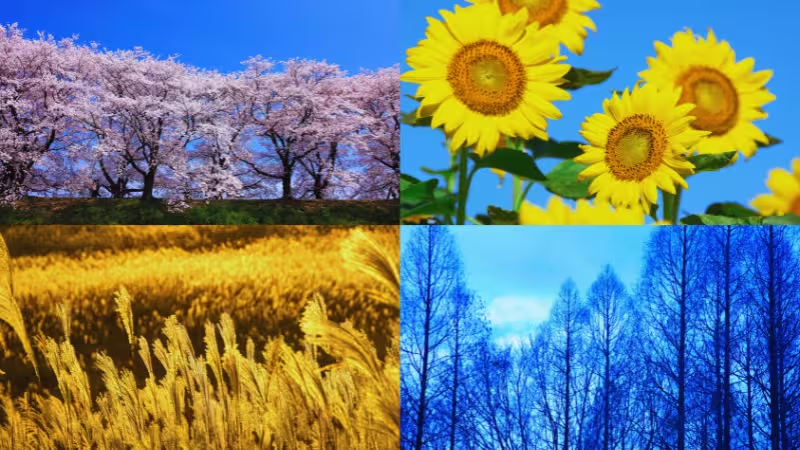
The seasons are not merely about the weather; they are deeply intertwined with people's lives, culture, events, and food.
In Japan, autumn naturally brings to mind cultural traditions like “autumn foliage viewing,” “moon viewing,” “new rice and seasonal ingredients,” and “autumn for reading and sports.” The custom of enjoying seasonal culture as part of daily life is a defining feature of Japanese culture.
On the other hand, in countries with only rainy and dry seasons, events and foods are categorized as “things you can do during the rainy season” and “things you can do during the dry season.” For example, in Indonesia, heavy rains during the rainy season disrupt transportation, while the dry season sees an increase in festivals and outdoor events. The rhythm of daily life itself is determined by these seasonal divisions.
Moreover, in India's traditional culture with its six seasons, each season has its own myths, poetry, and religious observances, creating strong ties to the calendar and literature. While this sense has faded in modern urban life, it remains deeply rooted in rural areas and traditional ceremonies.
In other words, even the concept of the same season can vary greatly in how it is perceived and culturally associated depending on the country or region. Japan's culture of “autumn” can be seen as a unique expression of values characteristic of a country that cherishes its four distinct seasons.
Summary
When comparing countries that have autumn and those that don’t, more than just a “difference in climate,”differences in culture and values become apparent.
Comparing countries with and without autumn reveals that not only the climate but also culture and values regarding daily life differ significantly.
The autumn culture that has become commonplace in Japan is truly unique in the world.

On iPhone / iPad, choose Tap Share → Add to Home Screen 》.
A pocket dictionary where you can instantly look up climate comparisons and cultural differences 📘
📍Super handy for travel, study abroad, and trivia research🌍✨
※The information on this page is based on research and interviews conducted as of September 2025. Weather and festival dates may vary, so please check the latest information with the local tourism bureau or official announcements.