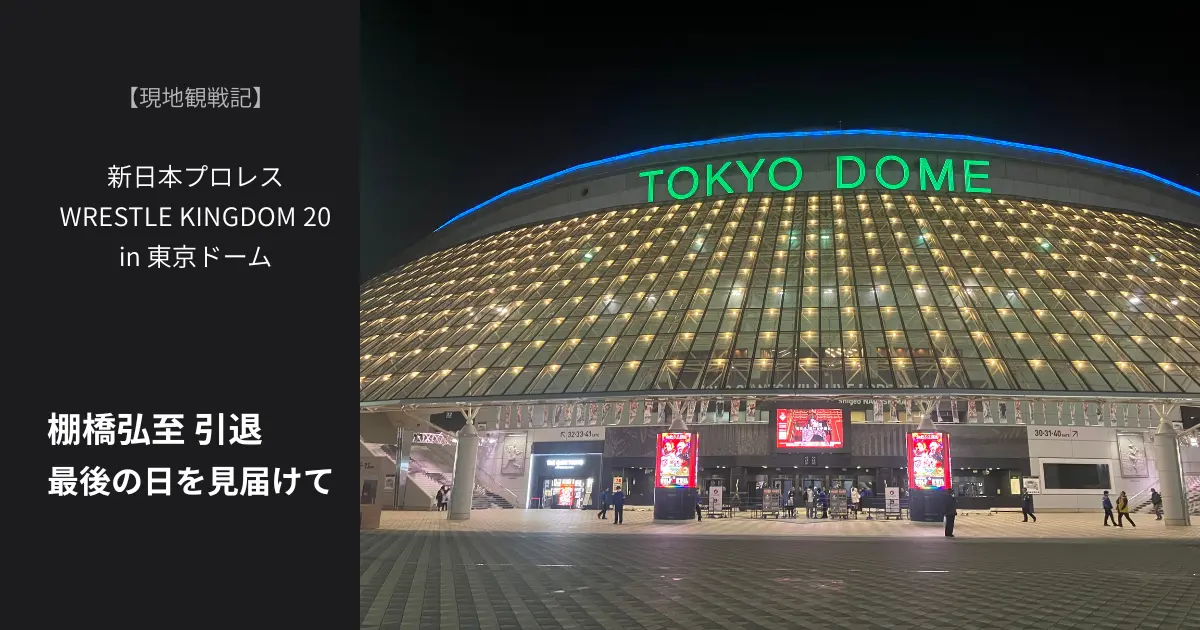
The show had already started—yet I still couldn’t step into the Tokyo Dome. Because the moment I saw Hiroshi Tanahashi’s final day with my own eyes, it would become real. And once it was real, it was over.
This article is a live, on-site record of witnessing “WRESTLE KINGDOM 20 in Tokyo Dome: Hiroshi Tanahashi Retirement” on January 4, 2026. I document everything I felt that day—the beautiful moments, the celebration, and the emotions I couldn’t fully process.
🔖 If you think you might want to revisit this match report later, saving it makes things easier 👇
On iPhone/iPad: Share → Add to Home Screen .
You’ll be able to open the “Hiroshi Tanahashi Retirement” WRESTLE KINGDOM 20 live report anytime 📦✨
The reason I stopped outside Tokyo Dome|It had already started, but I couldn't get in
By the time I arrived at Tokyo Dome, "WRESTLE KINGDOM 20 in Tokyo Dome" (1.4 / Itton Yon) had already begun. Even so, I felt no urgency.
The thought "I must hurry to my seat" strangely never arose. It was less a feeling of anticipation and more akin to hesitation.
Seeing Hiroshi Tanahashi retire with my own eyes would truly mean it's over. Perhaps I just wanted to avert my gaze from that reality, even for a moment.
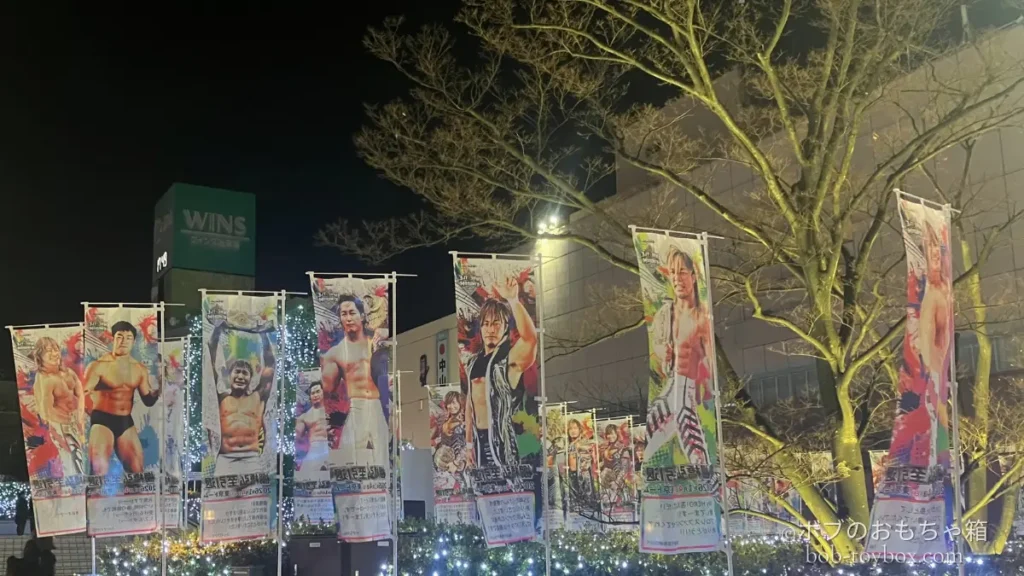
I photographed the dome's exterior, snapped a picture of the Tanahashi banner, and picked up some merchandise. Each action was a moment to compose myself.
Finally entering and taking my seat, Wolf Aaron's debut match began just as I settled in. Combined with the fact that this was my first time watching pro wrestling, I was instantly drawn in by the sheer intensity radiating from the ring.
The majesty of champion EVIL, Wolf's beautiful back throw. An unexpected turn of events and a victory in his debut match.
On the day I came to witness the "end," the first thing I saw was the "beginning." From that moment on, I was completely engulfed by the atmosphere of the Tokyo Dome.
The Power of Pro Wrestling Experienced at My First Match|Wolf Aaron's Debut Match
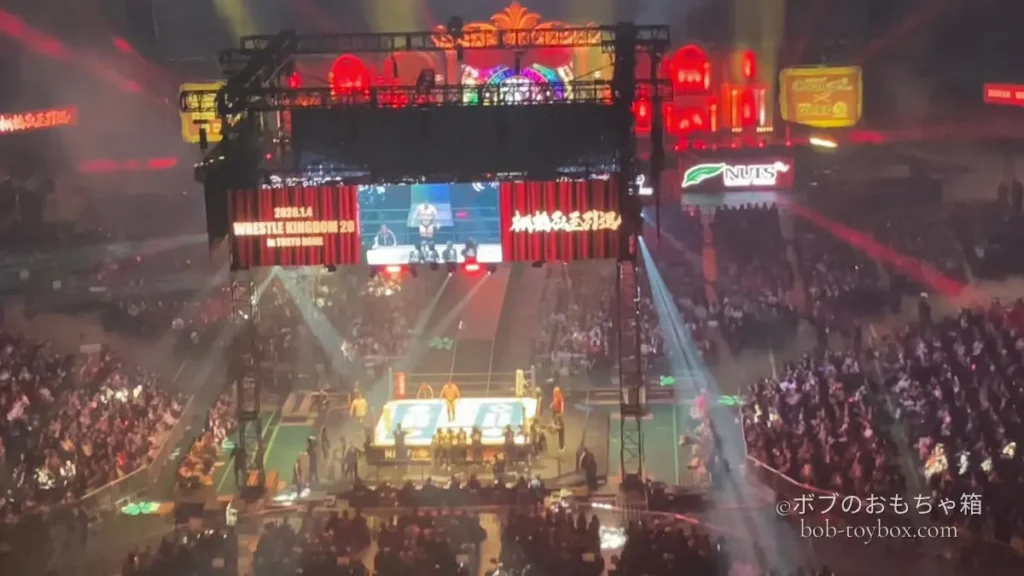
The moment I took my seat, Wolf Aaron's debut match began. I had almost no prior knowledge, but the instant I saw him step into the ring, I sensed intuitively that this fight would be something special.
Opposite him stood the champion EVIL. His sheer presence and commanding aura were overwhelming even as he entered the ring, standing like an unbreakable wall. Within that, Wolf charged head-on.
What particularly stood out was the beauty of the back throw. In an instant, the body soars through the air and is slammed down. The entire sequence is executed with such precision that a gasp naturally rises from the crowd.
I was reminded that pro wrestling isn't just about flashy moves—it's about the way the wrestlers use their bodies and the timing of their actions. The match was evenly matched from the start, with unexpected developments continuing throughout.
The result—a win in his debut match— Every near fall stopped at two—and every time, the Dome inhaled as one. This is not just a retirement match.
At Tokyo Dome, where I came to witness the end, what first confronted me was the moment of a new beginning. In this single match, I felt the profound depth and sheer power of the world of professional wrestling hammered into my very being.
From here on, the atmosphere in the venue grows even more intense.
The Moment Growth and the Future Were Assured|Yota Tsuji Signals a New Era
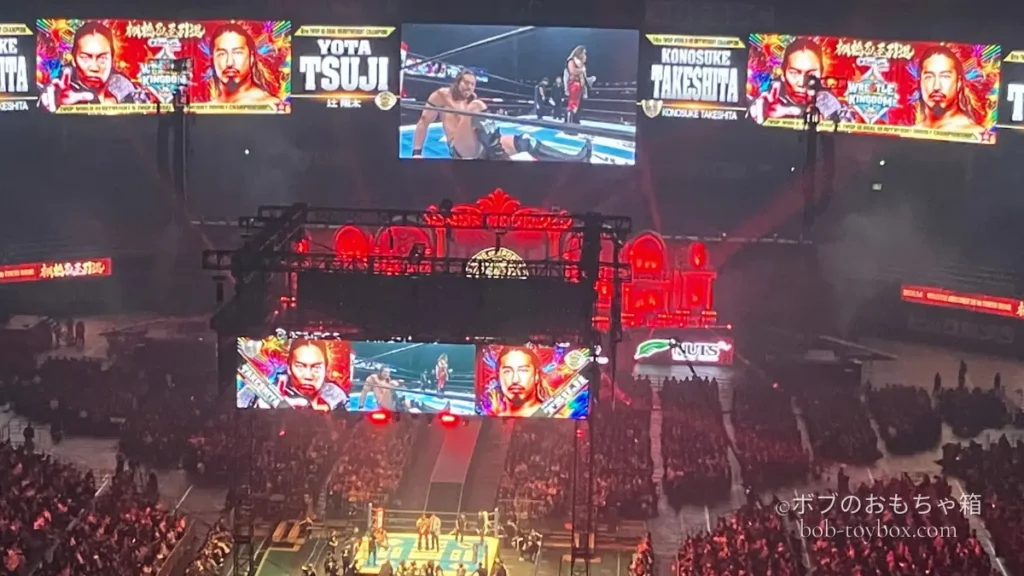
Next up was the bout between Yota Tsuji and Yukinosuke Takeshita. Witnessing this match was one of the most memorable events of the entire event.
Yota Tsuji was a wrestler I'd been keeping an eye on for some time. Yet, seeing him again after so long, he bore no resemblance to the young prospect I remembered. Gone was the aura of a Young Lion; he now possessed the poised presence of a fully realized professional wrestler.
Early on, Takeshita set the pace. His power and consistency pushed Tsuji onto the back foot. But Tsuji stayed composed, gradually turning the tide—and the moment he shifted into counterattacks was sharp and decisive.
Rather than reacting passively, he builds his matches with his own will. He absorbs his opponent's strength and strikes back head-on. From each and every one of these movements, it's clear that Tsuji has already taken the initiative.
The result was Yota Tsuji's victory.
More than the outcome, what stayed with me was that this matchthe beginning of a new erawas something you could truly feel. Standing there was someone who will carry New Japan Pro-Wrestling into the future. It was a moment that made me certain of that.
After the match, Tsuji's words to Takeshita—"Your eyes aren't dead at all."—also left a strong impression. A relationship of mutual recognition despite their rivalry. That single line seemed to carry both respect as rivals and the resolve shared by those who would carry the next generation forward.
Simply being able to watch this match was already a valuable experience. It was a game that truly made me feel the future within that day spent seeing it through to the end.
A Presence That Brought Peace of Mind|The Unwavering Strength of Kazuchika Okada
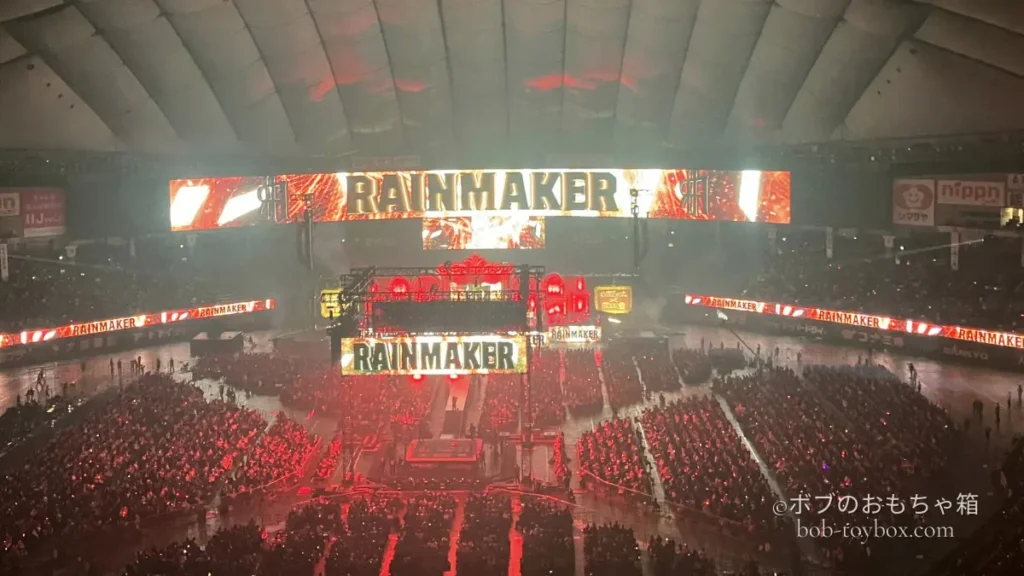
As soon as Yota Tsuji's match ended, the words "RAINMAKER" appeared in large letters on the screen without a moment's pause. At that instant, I could feel the atmosphere in the venue shift—clearly and unmistakably.
Kazuchika Okada is someone I’ve watched for many years, dating back to his time in New Japan Pro-Wrestling. Even back when Shinsuke Nakamura was in CHAOS, he was always at the center of it all.
To be honest, he was never a wrestler I felt deeply drawn to. His match pacing and finishing moves felt repetitive, and I found myself watching him from a distance.
And yet, this Ittenyon felt different the moment it began. The moment Okada's name appeared on the screen, a strange sense of reassurance spread through the venue. Just knowing that Okada was coming seemed to steady the air itself—calming the venue, while quietly building anticipation.
Okada appeared to the sound of his AEW entrance theme, looking exactly as he did in my memory. Even after changing promotions, his stance and the aura he exuded hadn't changed one bit. That was what reassured me the most. His strength was still there, unchanged, right in front of us.
Everyone in the building understood one thing: this would be Hiroshi Tanahashi’s final match.
That's precisely why it held such profound significance that his opponent was Kazuchika Okada. Two figures representing their era sharing the same ring. That alone made it clear this match would be special.
Okada was a source of reassurance. No matter how the match unfolded, he would always be there to catch you. That sense of trust came through loud and clear from the ring.
It was because of that sense of security that I was finally able to brace myself for what came next.
The Reality of Farewell|Hiroshi Tanahashi's Final Entrance

After the reassurance Okada brought, the moment I had been avoiding finally arrived.
The screen began to trace Hiroshi Tanahashi’s journey—and with it, my chest quietly tightened. Alongside countless memorable moments, the words "Hiroshi Tanahashi" appeared in large letters. In that instant, something welled up deep within my chest.
Ah—so this really is the end. This was the first moment it settled in, without asking my permission.
Hiroshi Tanahashi slowly emerged, looking exactly as he did in my memories. The ace I'd seen countless times on TV. He changed the air just by stepping into the ring. No gestures, no theatrics—just his presence. Even in his final entrance as an active wrestler, his bearing showed no sign of decline.
The moment I saw that broad back, I instinctively felt the weight of everything he'd carried all this time. The responsibility as New Japan Pro-Wrestling's ace. The pride of leading Japanese pro-wrestling. Thinking about everything he carried—the ring, the company, the expectations—I felt nothing but gratitude.
A roar rose from the crowd—not one voice, but everyone’s voice layered together. and the entire Tokyo Dome was filled with chants for Tanahashi. It wasn't just one person's voice; everyone was shouting with the same passion. It was a moment where that sense of unity was palpable.
At that moment, no one needed it explained. The match about to begin was not just any match. It was the final hour of Hiroshi Tanahashi—the wrestler.
And then the gong sounded—and there was no turning back.
The Moment Souls Collided|Hiroshi Tanahashi vs. Kazuchika Okada
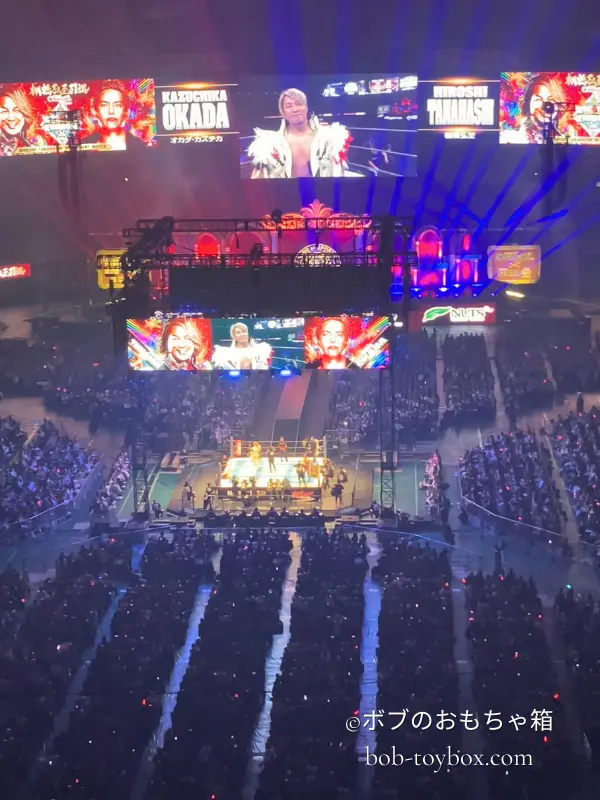
The moment they stood across from each other, the weight of New Japan Pro-Wrestling’s history filled the ring.
The moment the bell rang, the atmosphere inside Tokyo Dome shifted distinctly. All eyes in the arena turned to the ring where Hiroshi Tanahashi and Kazuchika Okada stood.
No one wanted to blink. The Dome went tight and quiet in that particular way—when everyone knows they’re standing at the edge of something final.
From the opening moments, Okada imposed his rhythm, and you could feel Tanahashi being tested. Sharp dropkicks, repeated attempts at the Rainmaker. And yet, Tanahashi kept rising—without hesitation, without complaint. He'd take the move, rise again, and take it once more. No matter how many times he was knocked down, his persistence was undeniable—the very tenacity we've come to expect from the ace.
There was a moment when he exchanged rainmakers. But in the end, he chose to face it head-on. Every time Faure pinned him, Tanahashi returned with a two-count.
Even as the air in the arena thickened with the feeling that "it might be over," Tanahashi rose to his feet. This wasn’t something to be explained. It was soul meeting soul—understood through bodies, not words. It was a moment understood not through words, but through the body.
The moment I’ll never forget came out of nowhere—yet it also felt inevitable. Tanahashi unleashedShinsuke Nakamura's BomayeAfter Shibata’s Sleeper Hold and that brutal PK, the next echo was Nakamura.
The arm swing, the timing, the "YeaOh!!" cry. t wasn’t perfect because it was clean—it was perfect because it carried memory. Not the Kinshasa used in WWE, but the Bomaye used by Shinsuke Nakamura in New Japan Pro-Wrestling. Not just the shape of the move, but every single motion overlapped.
Nakamura wasn’t in the building. And yet, in that moment, it felt impossible to say he wasn’t there.
Looking back, even the name of the move that became synonymous with Tanahashi—the Sling Blade—was coined by Nakamura. The story goes that Nakamura exclaimed, "That's cool, isn't it?" with delight, only to later learn its origin and give a wry smile. This anecdote, too, is part of the narrative that has always defined their relationship.
That's precisely why this Bomaye wasn't abrupt. I believe it was a blow that gently returned what had been built up over a long time.
The retirement match that never happened. The two who wanted to stand on this stage most were Tanahashi and Nakamura. Tanahashi channeled that desire through his own body, sublimating it on the ring.
If the bomaye of the day remained strong,
Shinsuke Nakamura's own wordsI would also like you to touch on the following.
A story that certainly continued even on the night I couldn't stand in the ring.
Read “Shinsuke Nakamura: USA Days” on Amazon
Amidst these conflicting emotions, the match was steadily approaching its final stages. Each time the announcer called out the remaining time, the end crept closer, whether we were ready or not.
I didn't want it to end like this. That wish crossed my mind again and again.
No matter how hard he was pushed, Tanahashi never gave up and never showed any signs of limitations. On the contrary, he performed the high fly flow again and again. It was as high and powerful as we have seen on TV. I feel that he showed us what an ace is by his body until the end.
Every time Faure was knocked down, the arena echoed with chants of "Tanaashi!" and "GO! ACE!" The volume was enough to shake the entire Tokyo Dome. It was a moment when I understood, just a little, what wrestlers mean when they say they want to die in the ring.
And then came the Rainmaker—one clean, crushing blow. Tanahashi tried to rise anyway, as if his body refused to accept the ending… and then he fell again. The result went to Kazuchika Okada.
After the match, Okada took the microphone, bowed deeply toward Tanahashi lying on the ring, and said, "Thank you very much," before leaving the ring.
From Okada, there wasn't a shred of malice to be found; what stood out was how he treated his seniors with respect as a junior wrestler right up until the very end. Seeing that demeanor, Watching him bow and say “Thank you,” I understood—not in words, but in feeling—what kind of wrestler Okada Kazuchika is.
This is not just a retirement game.
A time when eras faced each other, exchanging what they had received.
It was a battle where soul truly clashed with soul.
What the Retirement Ceremony Revealed|Blessings and an Unshakable Sense of Unease
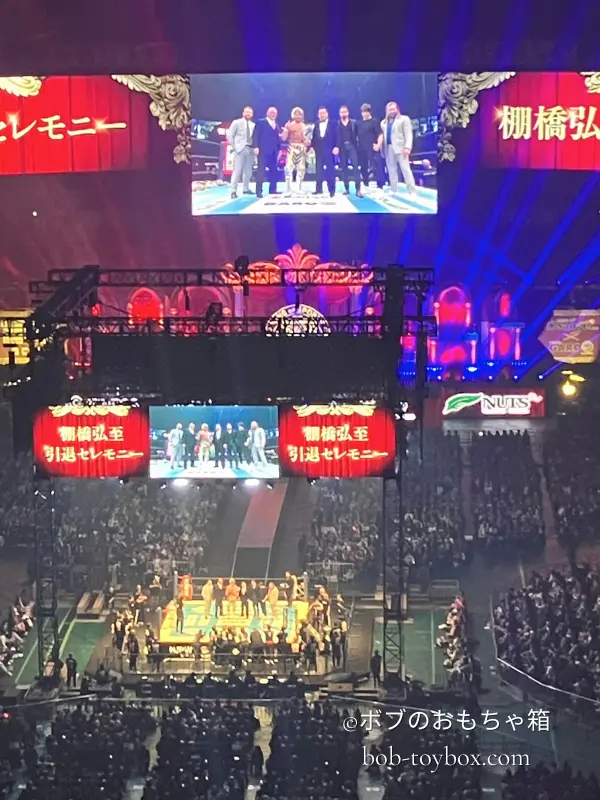
What stood in the ring was not just people, but time itself.
After the match between Hiroshi Tanahashi and Kazuchika Okada ended, the retirement ceremony began.
What stood there were not just names—each carried a shared history with Hiroshi Tanahashi.
🔻Wrestlers who appeared at the retirement ceremony
- Jay White
-
I never imagined I would see him here. After presenting the bouquet, He bowed deeply—and in that single motion, everything he wanted to say was already there. The trust and respect Hiroshi Tanahashi had built were undeniably present.
- Will Ospreay
-
With tears welling in his eyes, he presented the bouquet and bowed deeply in profound gratitude. As a foreign wrestler who had grown up in Japanese rings, his posture conveyed both his appreciation for Hiroshi Tanahashi and his resolve.
- Kenny Omega & Kota Ibushi
-
The moment these two stood side by side in the ring, the atmosphere in the arena shifted. Seeing the two of them standing side by side, my chest tightened before I realized it.
Seeing Kenny Omega live is truly in a league of its own. An overwhelming aura, the kind only someone who defined an era can radiate, emanated from his entire being.
And Kota Ibushi.Despite everything his body had been through, Ibushi stood there anyway. Kenny watched with a gentle expression as he and Tanahashi embraced and wept. That scene was so beautiful it left one speechless, an unforgettable moment.
- Katsuyori Shibata
-
That rough-and-tumble Shibata was clinging to Tanahashi, tears streaming down his face. In the end, he pulled off his own T-shirt, and they pounded each other's chests. He clung to Tanahashi, tears streaming down his face, then tore off his shirt and struck his chest. That was all the farewell he needed.
- Keiji Mutoh & Tatsumi Fujinami
-
When the two legends stepped into the ring, the air itself seemed to shift. Surrounded by them, Tanahashi's expression seemed somehow serene, almost happy.
🔻Tetsuya Naito: A "Special Presence"
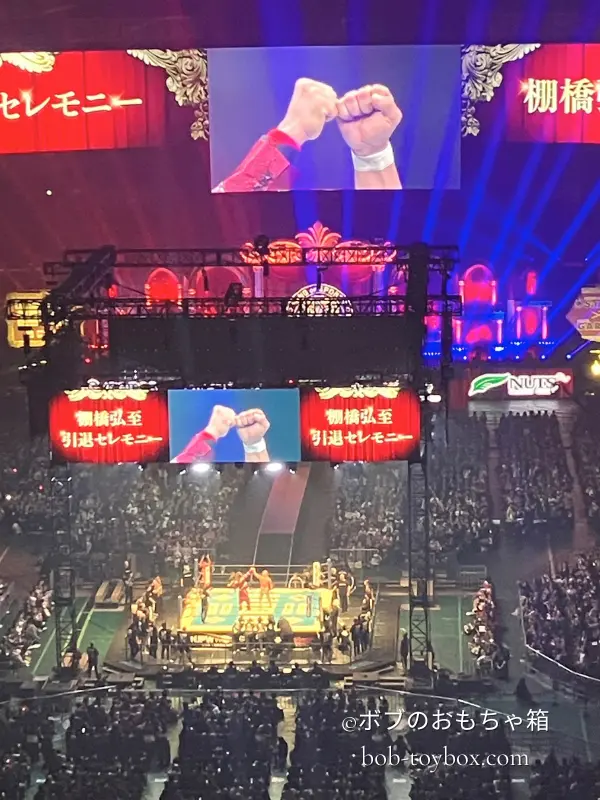
In the instant their fists touched, more than words could express was contained within.
Just when it seemed to be ending, the words "Tetsuya Naito" appeared on the screen.
A wave of cheers erupted. I could clearly feel the venue's energy level rise another notch.
Alongside BUSHI, his entrance—taking his time in a way that felt quintessentially Naito—shone with a unique brilliance even within this retirement ceremony. Here before me now stood a presence I'd never seen live during my time with New Japan Pro-Wrestling. That fact alone made it a dreamlike moment.
Stepping into the ring and grabbing the microphone, Naito declared, "I joined New Japan Pro-Wrestling because I saw you. I look forward to the day when I can meet you again on the New Japan Pro-Wrestling ring."
Naito's own words, Naito's own sense of distance. And finally, the moment they pounded their chests, raised their fists high, and lightly clasped knuckles together. What existed there was an unmistakable bond between master and disciple.
🔻The countdown to retirement, and the lingering sensation
After that, the ten-count for retirement was sounded by the gong. The audience rose to their feet and gazed silently at Hiroshi Tanahashi in the ring.
Amidst the crowd's cries of his name, Tanahashi closed his eyes, appearing to cling desperately to the present moment.
The ceremony was filled with blessings—and yet, something inside me still hadn’t caught up. Even so, at this point, the reality still hadn't fully sunk in. My mind understood, but my heart couldn't keep up. I watched Tanahashi circle the Dome one last time in the gondola. Only after he disappeared did I realize I had been holding my breath.
On the way home, the words that naturally slipped out were, “Tanahashi, you did a great job.”
The Legacy of the One Who Could Not Stand|The Absence of Shinsuke Nakamura
I'm watching you.
— Shinsuke Nakamura (@ShinsukeN) January 4, 2026
As the ceremony ended and the applause slowly faded, one absence refused to leave my mind. The absence of one person who should have been standing in this very place.
Shinsuke Nakamura did not stand in the ring at the Tokyo Dome. That fact was clear—and still heavy. I knew why he couldn’t be there. I understood it on paper.
I knew why he couldn’t be there. I understood it on paper. But knowing the reason didn’t make the emptiness any lighter.
In a later interview, Nakamura said something that stayed with me: “Many wrestlers want to stand in that ring. I hope someone will stand there for those who can’t.”
When I learned those words, the sense of unease I felt during the match quietly connected into a single thread.
What I learned later was that Konosuke Takeshita, who fought Yota Tsuji, was wearing a bandage around his arm during the match.Red armbandIt wasn’t just there by chance. It had been entrusted to him by Shinsuke Nakamura.
Unable to stand on this stage myself, I entrusted my feelings to someone else. That choice was what that red armband held.
Shibata Katsuyori's Sleeper Hold, then the PK, and Nakamura Shinsuke's Bomaye. That sequence didn’t feel like coincidence or showmanship. Tanahashi used his own body to leave behind the unfulfilled dream of one man.
The arm swing, the timing, the cry of "Iyaaoh!" The strike unleashed from it wasn't WWE's Kinshasa, but the Bomaye used by Shinsuke Nakamura of New Japan Pro-Wrestling. In that moment, it felt impossible to say Nakamura wasn’t there.
Each move and every technique bears the mark of the time the two had spent together. There was no need to explain it. Even when they weren't standing in the ring, the story was definitely continuing.
That is why this retirement cannot be reduced to romance alone.
Behind the celebrations, there were indeed matches that went unplayed and realities that remained insurmountable. Even so, the players gave their absolute best within their respective roles. That fact alone cannot be denied.
Because it couldn't stand, something remained strong.
Shinsuke Nakamura’s absence etched this retirement into the Tokyo Dome as something unmistakably human.
Lesson Kingdom 9.
Hiroshi Tanahashi, Kazuchika Okada, Kota Iibushi...
The time when all the people gathered at this Ittenyon stood in the same ring.
That is why the existence of the "one person who could not stand up" emerges more strongly this time.
▶︎ Watch Wrestle Kingdom 9 (January 4, 2015 – Tokyo Dome) on Amazon
What Hiroshi Tanahashi Left Behind|Beyond the Fact of Retirement
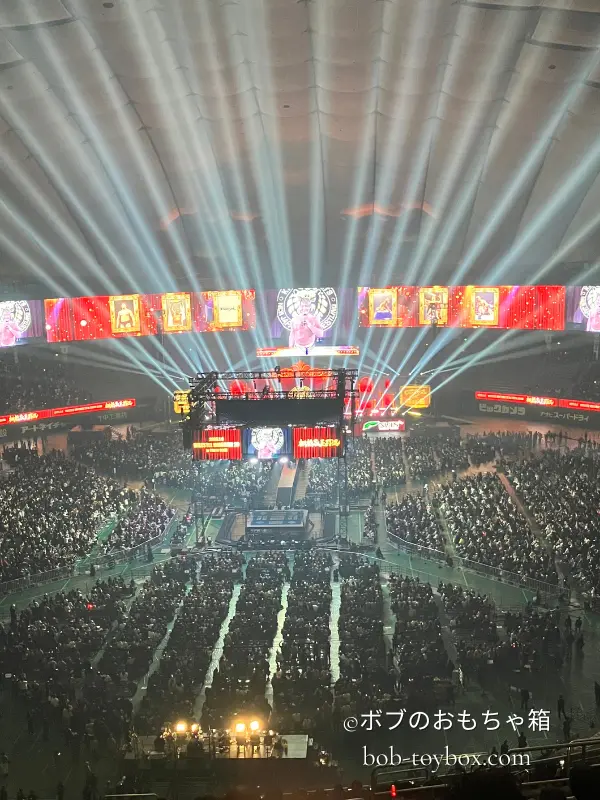
That night, Hiroshi Tanahashi’s retirement stopped being something personal—and became something shared.
Hiroshi Tanahashi's retirement was met with an outpouring of congratulations and applause. Seeing him bid farewell on the Tokyo Dome stage, surrounded by wrestlers and fans alike, was overwhelming in the quietest way.
This retirement should not be reduced to celebration alone.
There were matches that never happened, realities that could not be overcome, and gaps that would never fully close. Looking away from that fact would diminish the very path Hiroshi Tanahashi has walked.
Even so, what made this retirement linger so strongly in my heart was that Tanahashi remained the "ace" until the very end.
It was clear to everyone that his knees were nearing their limit. Yet he remained in the ring, rising again and again, continuing to unleash his high-flying moves. More than any result, the way Tanahashi kept rising—again and again—showed what it truly means to be the ace.
And the one who stood directly facing that back was Kazuchika Okada.
The Rainmaker pose he displayed in the final moments—his first in about two years— It was a return to his former self—chosen solely to face Hiroshi Tanahashi, without provocation or showmanship.
The respect offered by his greatest rival, standing across from him one last time. Tanahashi's stance— meeting it head-on and striving to rise until the very end— quietly conveyed that this retirement was more than just a simple conclusion.
Retirement is not where everything ends.
Entrusted to someone, remaining within someone, it continues on in transformed form. Shinsuke Nakamura’s absence, Kazuchika Okada's choice—all of it served to highlight the magnitude of Hiroshi Tanahashi's presence.
Hiroshi Tanahashi has left the ring.
But the story isn't over. Ace wasn't just a title—it was a way of life. This retirement has made that point crystal clear.
That was the most honest answer left behind by the wrestler Hiroshi Tanahashi.
Hiroshi Tanahashi’s final road was not about ending. It was about passing something on—and about the bonds that remain.
Why he was an "ace" until the end,
Tanahashi's own wordsFor those who want to trace it by.
Retirement is not the end, it is a passing on.
▶︎ Why Hiroshi Tanahashi Could Change New Japan Pro Wrestling (Kindle Edition) on Amazon
▶︎ Why Hiroshi Tanahashi Could Change New Japan Pro Wrestling (Paperback) on Amazon
You may also like to read
- The Night I First Watched NJPW - Why That Farewell Felt Heavier Than Expected
- The Unspoken Choice - Hiroshi Tanahashi's Retirement Match and the Presence of Tetsuya Naito
- A Night That Moved Me — Eric Clapton Japan Tour 2025 Live Report
On iPhone / iPad, go to Share → Add to Home Screen .
Tap once to return to the “Hiroshi Tanahashi Retirement” WRESTLE KINGDOM 20 live report 📦✨
So you can revisit the heat of the Tokyo Dome and the emotions that defied words, anytime.
*This article is based on the records and impressions of those who attended the "WRESTLE KINGDOM 20 in Tokyo Dome Hiroshi Tanahashi Retirement" on site at the Tokyo Dome on January 4, 2026. In addition, this article contains affiliate links, but they are included as a resourceful introduction to document and recount the work and events.