Sometimes, at a certain moment in life, a feeling has been there for a long time, but the words to name it have yet to be found. Three picture books translated by Mayumi Maeda quietly gave names to those feelings. This is a record of the moment when words caught up with life.
There are moments when words come ”later”.
As people live their daily lives, they have a number of emotions that they cannot explain the reasons for.
A feeling of importance or a sense of excitement. A moment when you feel that somehow you can go forward now, or your existence that you are quietly convinced of. These things are certainly there, but they are often left unspoken and placed in the back of our minds.
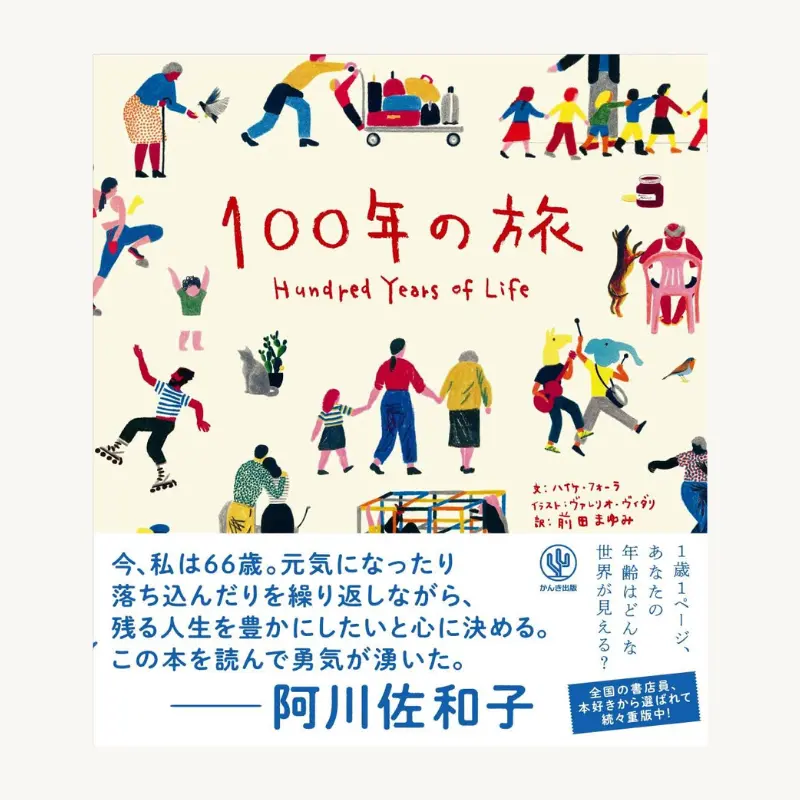
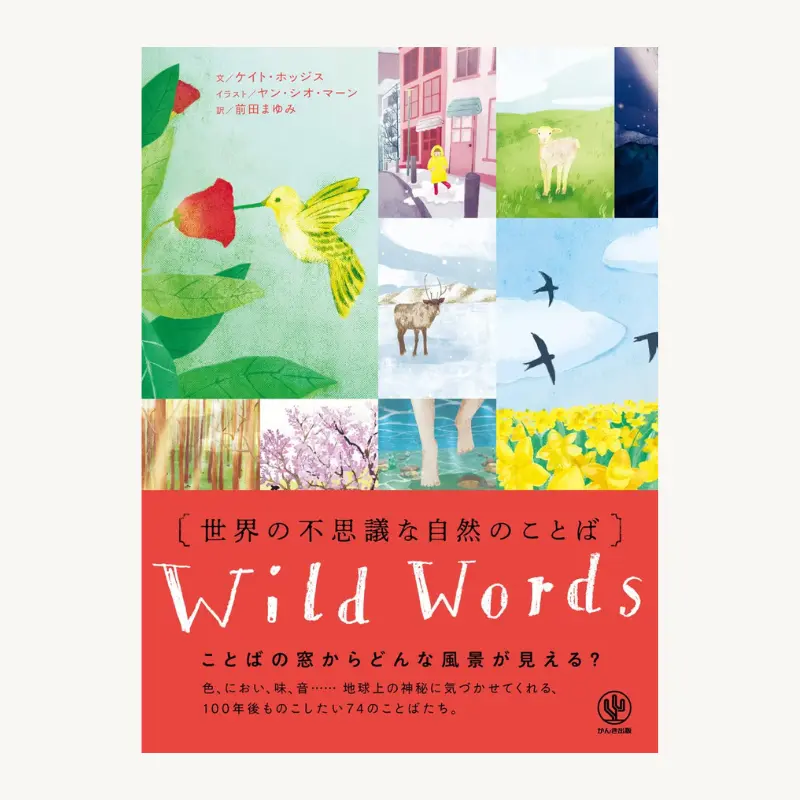
The three books explored here Hundred: What You Learn in a Lifetime, Wild Words: A Collection of Words from Around the World That Describe Happenings in Nature, and Lost in Translation: An Illustrated Compendium of Untranslatable Words from Around the World.
That is, none of the books impose new values; rather,they gently give a name to an emotion that was already in your heart.That is the point.
Unexplainable feelings of discomfort, elation, relief, and resolve that we have felt throughout our lives. These will begin to take shape later through stories and the language of the world.
In "Wild Words: A Collection of Words from Around the World That Describe Happenings in Nature," words rooted in culture and nature stand out like mirrors reflecting emotions.
It is more than learning something new.A name was given to something that had always existed quietly within.It felt less like learning something new and more like recognizing something that had always been there.
And the reason why this feeling reaches us naturally as Japanese is because Mayumi Maeda's translation carefully captures not only the meaning of the words, but also the feeling and breathing of the people behind the words.
The words quietly catch up with the life that has already been lived.The words quietly catch up with the life you have already walked through.These books offer that kind of quiet, reflective time.
The three books are separate but take you to the same place.
Hundred: What You Learn in a Lifetime
Wild Words: A Collection of Words from Around the World That Describe Happenings in Nature
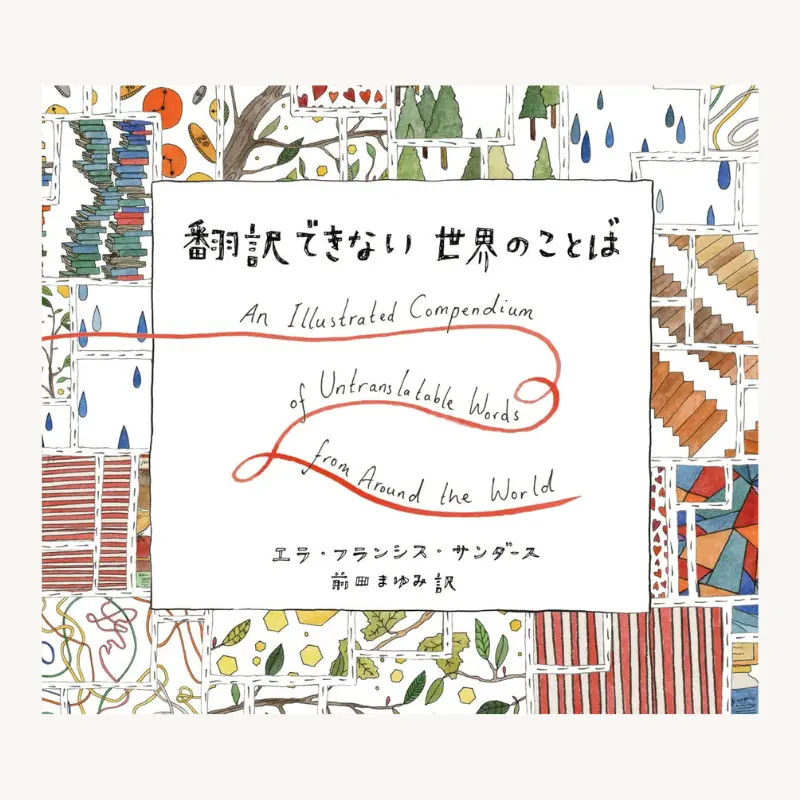
Lost in Translation: An Illustrated Compendium of Untranslatable Words from Around the World
These three books differ in both subject matter and mode of expression. A story that gives a bird's-eye view of life, a book that collects words from around the world, and a picture book in translation that brings emotions to life. At first glance, they do not have much in common.
Yet when you finish reading, each book takes the reader to a place that is strangely close. It is not a place that tells you how to live, but a place that affirms the life you have already felt.
The "Hundred: What You Learn in a Lifetime" depicts life not as measured by linear successes and failures, but rather as a series of circumnavigations and overlaps.
The "Wild Words: A Collection of Words from Around the World That Describe Happenings in Nature" showcases the diversity of emotions and sensations through words rooted in nature and culture.
"Lost in Translation: An Illustrated Compendium of Untranslatable Words from Around the World" gently illuminates the unexplained movements of the heart in the form of words.
What the three books demonstrate is a perspective that does not rush through life. Instead of looking for what is missing,it invites us to reexamine the time and emotions that have already accumulated.
This attitude transcends differences from book to book and leaves a common reading experience.
The translation carried more than just words.
The reason why these three books reach the heart naturally as Japanese is because of the way they are translated.
Translation is not a process of replacing meaning. Especially in books that deal with emotions and life, even the temperature and pause behind the words are questioned. Mayumi Maeda's translations faithfully convey the information of the original text while maintaining a natural breath of Japanese.
There is no sense of strain.
No over-explanation.
And nothing feels diluted.
The consistent attitude throughout the three books is not to impose one's ideas on the reader.
The translated words do not rush to conclusions, do not evaluate emotions, but simply lean in quietly. That is why the reader can feel at ease and layer in his or her own life and emotions.
What these three books have given us are not answers.
A moment to reconnect with the texture of life through words.
This can be seen as the greatest value that Mayumi Maeda’s translations bring.
All three books mentioned here have been published in book form.
- View "Hundred: What You Learn in a Lifetime" on Amazon
- View "Wild Words: A Collection of Words from Around the World That Describe Happenings in Nature" on Amazon
- View "Lost in Translation: An Illustrated Compendium of Untranslatable Words from Around the World" on Amazon
Why do these three books resonate with adults who feel they’ve come full circle?
These three books are sometimes presented as picture books for children. However, it is probably adults who have lived a certain amount of time who will actually find strong resonance in them.
It is not a future these books speak to, buthe past and the emotions already accumulated.
When we are young, we tend to be more conscious of what we lack and what we will gain. On the other hand, as life goes on, there are more and more experiences and feelings that cannot be put into words properly.
A feeling that cannot be explained but certainly remains. A quiet acceptance of the path we have chosen. The weight of time shared with someone else.
These three books do not attempt to sort through those feelings. They simply shine a light on them, without evaluation or offering conclusions. Therefore, the reader can feel at ease and can put his or her own life on top of them.
This is not reading for answers;it is reading to reconfirm your steps.
Perhaps it is only after coming full circle as an adult that one can truly resonate with its serenity and sense of space.
When the words catch up, life gets a little more in order.
After reading these three books, nothing will change dramatically. However, the previously ambiguous feelings and sensations will be given a place of their own in the form of words.
It is not about acquiring new values. Rather, it isthe experience of having the life you have already lived gently organized through words.
The words did not come first; life came first. The words caught up with that progress later.
These three books, translated by Mayumi Maeda, quietly supported us at that very moment.
Japanese language that is comfortable.
Expressions that do not rush emotions.
An attitude of trust in the reader's life.
That is, none of the books impose new values; rather,they gently give a name to an emotion that was already in your heart.
These three books are not books that will give you new answers every time you read them. However, they are books that gently offer you the words you need at the right time in your life.
When words catch up with life, the world may become a little more orderly, and our steps forward may naturally become lighter.
To those who carried the words and to those who will read them
It is no coincidence why these three books took readers to the same place.
There was a consistent attitude toward the work of translating words. Mayumi Maeda's translations are designed to breathe as Japanese while conveying the meaning of the original text without over- or under-delivering.
It does not overexplain.
It does not assume emotions.
It does not rush the reader.
It is because of that quiet translation that each of the three books, while having different themes, left the same reading experience. It is not the language that guides life,Words that gently accompany the life already walked.
Translation is not the act of replacing words, but the act of carefully handing over the background and temperature of the words to another culture. These three books, through the accumulation of just such work, have reached my heart naturally and deeply as Japanese.
If you are having feelings right now that you can't put into words properly.
If you don't know the reason, but you certainly have the feelings you are feeling.
Words do not always precede life. Sometimes they quietly catch up with us after the time we have walked. These three books are books to be placed gently on the bookshelf for such moments.
When words catch up with life, the world may be a little more orderly and the next step may seem more natural.
You may also like to read
- Eric Clapton in Japan 2025
- The diversity of senses revealed by the differences in lifestyles around the world|Winter is so different!
- Seen Through Someone's Eyes- Where the Landscape Speaks Instead of Words
*The information on this page is current as of February 2026. Editions and specifications (binding, price, etc.) are subject to change. Please check the official pages of publishers and bookstores for the latest information.